

Affordable Mindfulness: Alternatives to Paid Apps
Table of Contents
- Why Expensive Mindfulness Apps Might Not Be Your Only Option
- Free Mindfulness Apps Worth Exploring
- Mindfulness Exercises at Home Without Subscriptions
- Practising Mindfulness Without an App
- Short Daily Meditation Routines You Can Start Today
- Physical Tools and Habits That Support Mindfulness
- Frequently Asked Questions
Last Updated: October 5, 2026
Why Expensive Mindfulness Apps Might Not Be Your Only Option
Mindfulness doesn't require a monthly subscription. If you've been hesitant to start a meditation practice because of the cost of premium mindfulness apps, there's good news: alternatives to mindfulness apps range from completely free to remarkably affordable, giving you plenty of options.
Many people assume they need the latest app with all the features to build a sustainable practice. The reality is simpler. A consistent routine with basic guidance often delivers more benefit than sporadic use of a premium platform. At Inspree, we believe wellness shouldn't drain your budget, it should enhance your life without adding financial stress.
The challenge isn't finding mindfulness tools. It's finding ones that fit your lifestyle and your wallet. Whether you're a busy professional juggling work and home life, a parent squeezing self-care into stolen moments, or someone simply curious about meditation, there are proven ways to practise mindfulness without paying for expensive subscriptions.
Free Mindfulness Apps Worth Exploring
Several genuinely useful free mindfulness apps exist that offer solid meditation guidance without asking for your credit card. These aren't stripped-down versions of paid apps, they're complete platforms with real content.
Free apps typically offer core meditation sessions, breathing exercises, and sometimes sleep stories. The trade-off is usually advertisements or limited access to premium content. For most people starting out, the free tier is more than enough to establish a habit.
Common options include apps that provide guided meditations ranging from 3 to 20 minutes, sleep soundscapes, and breathing techniques. Many include progress tracking so you can see your consistency over time. The key advantage is you can test whether a meditation practice actually fits your routine before committing money.
When selecting a free mindfulness app, look for clear navigation, a variety of session lengths, and content that resonates with your style. Some apps focus on sleep, others on anxiety reduction, and some on general wellness. Finding one that matches your primary goal makes consistency easier.
Mindfulness Exercises at Home Without Subscriptions
You don't need an app at all to practise mindfulness exercises at home. Simple techniques work just as well as guided ones, especially once you understand the basics.
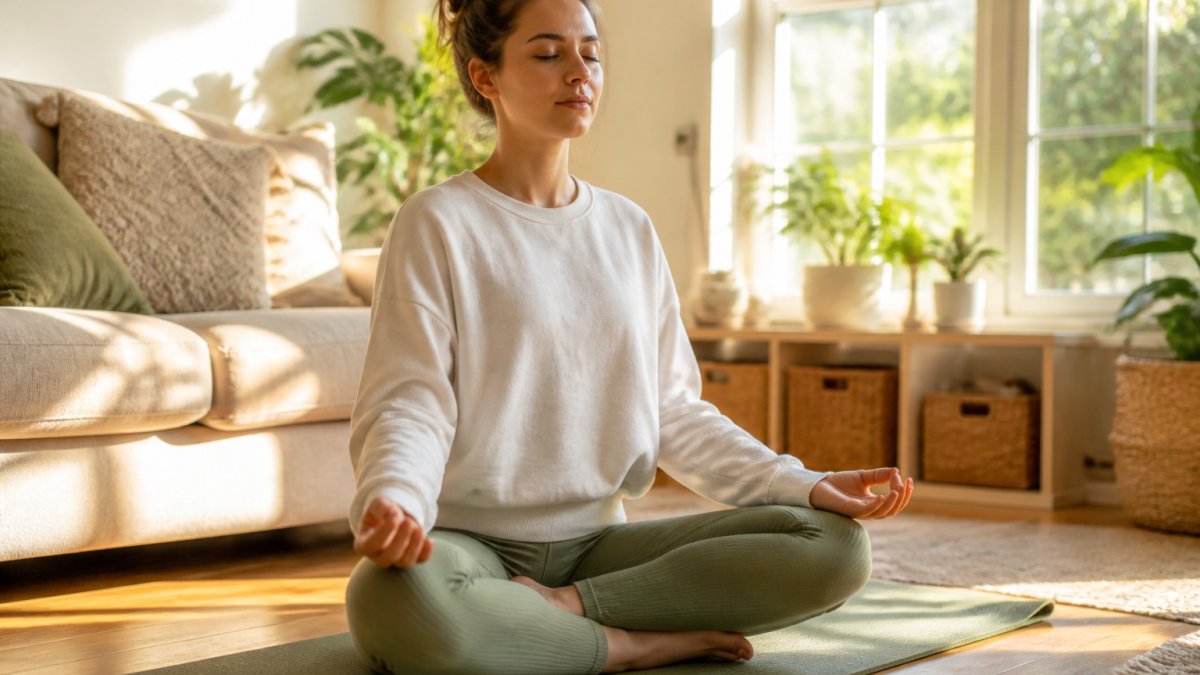
Body scan meditation is one of the easiest to start. Sit or lie comfortably, then slowly bring attention to each part of your body from your toes to your head. Notice sensations without judging them. This takes 10-15 minutes and requires nothing except a quiet space.
Breath awareness is equally simple. Find a comfortable position, close your eyes, and focus entirely on your breath. Count each exhale from one to ten, then restart. When your mind wanders, and it will, gently return to counting. Five minutes is a solid starting point.
Walking meditation works well if sitting still feels uncomfortable. Move slowly through a room or outside, paying complete attention to each step, the ground beneath your feet, and your breathing. This combines movement with mindfulness, making it ideal for restless people.
Box breathing is excellent for stress in the moment. Breathe in for a count of four, hold for four, exhale for four, hold for four. Repeat this cycle five to ten times. It takes just a few minutes and can be done anywhere.
These techniques cost nothing and produce real results. The advantage over apps is that you're not dependent on technology. Your practice becomes portable and always available.
Practising Mindfulness Without an App
Many people find that the simplest approach is often the most sustainable. Practising mindfulness without an app removes distractions and creates space for genuine reflection.
Journalling is a powerful mindfulness practice. Spend ten minutes each morning or evening writing freely about your thoughts and feelings. Don't aim for perfect prose, just write what comes. This builds awareness of your mental patterns and emotional state.
Mindful eating is another accessible practice. Choose one meal a day and eat without screens or distractions. Notice colours, textures, flavours, and smells. Chew slowly. This single meal can become your daily mindfulness anchor.
Tea or coffee rituals work beautifully. Rather than rushing through a hot drink while checking your phone, make it intentional. Feel the warmth of the cup, notice the aroma, taste each sip. Five minutes of genuine presence becomes meditation.
Nature observation requires no equipment. Sit outside for ten minutes and simply observe. Watch leaves move, listen to sounds, feel the air. This costs nothing and provides grounding that many find more effective than guided sessions.
Gratitude reflection is simple yet transformative. Each evening, think of three specific things you're grateful for and why. This shifts your mental focus and builds a more positive mindset over time.
These approaches work because they're integrated into your existing routine rather than added as separate tasks. They become part of how you live rather than something you must schedule.
Short Daily Meditation Routines You Can Start Today
Building a sustainable mindfulness practice starts with routines you can actually maintain. Short daily meditation doesn't require hours, even three minutes makes a measurable difference when done consistently.
A basic three-minute routine works like this: spend one minute settling into a comfortable position and closing your eyes. Spend the next minute focusing on your breath, noticing the natural rhythm without changing it. Spend the final minute slowly opening your awareness, noticing sounds and sensations around you, then gently open your eyes.
A five-minute routine adds depth. Begin with two minutes of settling and breath focus. Move into two minutes of body awareness, mentally scanning from your feet upward. Finish with one minute of gentle transition back to your surroundings.
For those with slightly more time, a ten-minute routine includes: two minutes of settling, three minutes of breath focus, three minutes of body scan, and two minutes of transition. This covers the main meditation techniques and feels substantial without being overwhelming.
The best routine is the one you'll actually do. If mornings work better than evenings, practise in the morning. If you have five minutes at lunch, use that slot. Consistency beats perfection every time.
Physical Tools and Habits That Support Mindfulness
Beyond meditation itself, certain physical tools and environmental habits amplify your mindfulness practice. These aren't essential, but they make consistency easier.
A comfortable cushion or mat signals to your brain that this space is for practice. You needn't spend much, a folded blanket works perfectly. The point is creating a small designated area that becomes associated with calm.
A journal for tracking your practice builds accountability. Simply noting the date and duration creates a visible record of consistency. Many people find this motivating.
Ambient lighting matters more than most realise. Soft, warm lighting supports relaxation better than harsh overhead lights. If you're setting up a meditation space at home, consider a simple lamp or allowing natural light in.
Background sounds can help or hinder depending on preference. Some people practise in complete silence. Others prefer gentle nature sounds or soft music. Experiment to find what supports your focus.
Comfortable clothing removes distractions. You needn't buy special meditation wear, just wear something that doesn't restrict movement or create discomfort.
At Inspree, we understand that creating space for wellness in your home matters. The right environment, proper lighting, comfortable seating, minimal clutter, supports the mental shift into mindfulness. Small investments in comfort often yield big returns in consistency.
A timer keeps you accountable without requiring you to check the clock. Even a simple phone timer works well. Knowing the session has a defined end actually makes it easier to commit fully.
The physical environment you create influences your mental state. You don't need an elaborate setup, but a dedicated, comfortable space makes your practice feel intentional rather than rushed.
The truth is that alternatives to mindfulness apps aren't hard to find, they're everywhere. Free apps offer genuine value, home-based exercises require nothing but attention, and simple routines fit into any schedule. The barrier to mindfulness isn't cost or access. It's consistency.
Start with whatever appeals to you most. If guided instruction helps, use a free app. If self-directed practice feels right, choose a simple technique. If you want environmental support, Inspree's range of wellness and comfort products, from ambient lighting to ergonomic cushions, can help you create a space where mindfulness feels natural. The goal isn't perfection. It's building a practice that becomes as routine as brushing your teeth. That's where real change happens.
Frequently Asked Questions
What are the best free mindfulness apps available?
Several free mindfulness apps offer guided meditations and breathing exercises without requiring payment. Many paid apps offer free trial periods or limited free versions. Open-source alternatives and apps funded by charities or health organisations often provide full access without subscriptions. Check app stores for options that include guided practices, timers, and progress tracking at no cost.
Can you practise mindfulness without using an app?
Yes, mindfulness doesn't require technology. Breathing exercises, body scans, and seated meditation can be practised anywhere using only your attention. Walking meditation, journaling, and mindful eating are effective techniques you can do daily. Many people find that removing the screen actually deepens their practice.
How much time do you need to practise mindfulness each day?
Research suggests that even 5 to 10 minutes of daily mindfulness can produce measurable benefits for stress reduction and mental clarity. Consistency matters more than duration. Starting with short sessions helps build the habit without feeling overwhelming. You can gradually extend your practice as it becomes part of your routine. Many people find that short daily meditation is more sustainable than occasional longer sessions.
Are there free mindfulness resources that don't require a subscription?
Yes. Many organisations offer free resources including guided audio files, YouTube channels with meditation videos, and podcasts. Books and library resources teach techniques you can apply independently.