

Storage alternatives to plastic bins for small flats
Table of Contents
- Why storage alternatives to plastic bins matter in small spaces
- Sustainable home organisation ideas for limited square footage
- Space-saving storage solutions for small flats that actually work
- How to declutter a small flat before choosing new storage
- Comparing durability and longevity across materials
- Vertical storage and hidden solutions for compact homes
- Frequently Asked Questions
Last Updated: September 24, 2026
Why storage alternatives to plastic bins matter in small spaces
For decades, alternatives to plastic storage bins have competed with traditional plastic storage bins in small flats. They're cheap, stackable, and functional. But they're not your only option, and for many people, they're not the best one.
The real problem with plastic isn't just environmental. It's that plastic bins often feel temporary, industrial, and uninspiring. When your flat is small, every item you keep needs to earn its place visually as well as functionally. A plastic bin sitting on a shelf broadcasts "I'm storing clutter here." A wicker basket or wooden crate tells a different story entirely.
Storage alternatives to plastic bins offer something more: they blend function with aesthetics. They age better, last longer, and make your space feel intentional rather than makeshift. The right storage choice can transform how you experience your home.
This guide explores storage alternatives that actually suit compact living. We'll cover materials that withstand regular use, styles that complement your décor, and solutions that don't sacrifice durability for looks.
Sustainable home organisation ideas for limited square footage
Sustainable storage starts with choosing materials that last. When you invest in quality alternatives to plastic bins, you reduce the need to replace them every few years. This matters more in small spaces, where every purchase decision affects your environment.
Natural materials like rattan, wood, and fabric represent a shift toward thoughtful consumption. Rather than accumulating disposable storage solutions, you're building a system that adapts as your needs change. A wooden crate that holds seasonal clothes one year can store books the next. A wicker basket works in a bedroom, kitchen, or living area without looking out of place.
The sustainability angle also reflects how people actually live. Fewer, better storage solutions mean less clutter overall. When your storage looks intentional and beautiful, you're more likely to maintain it properly and resist impulse purchases that don't fit your system.
Consider multi-functional pieces that serve storage and display simultaneously. Open shelving with attractive baskets and boxes creates visual interest while keeping items accessible. This approach works particularly well in open-plan flats where storage can't hide behind closed doors.
Space-saving storage solutions for small flats that actually work
The best storage solutions for compact homes do more than hold things, they create the illusion of more space. This means choosing vertical options, selecting pieces that don't visually dominate a room, and avoiding anything that feels bulky or oversized.
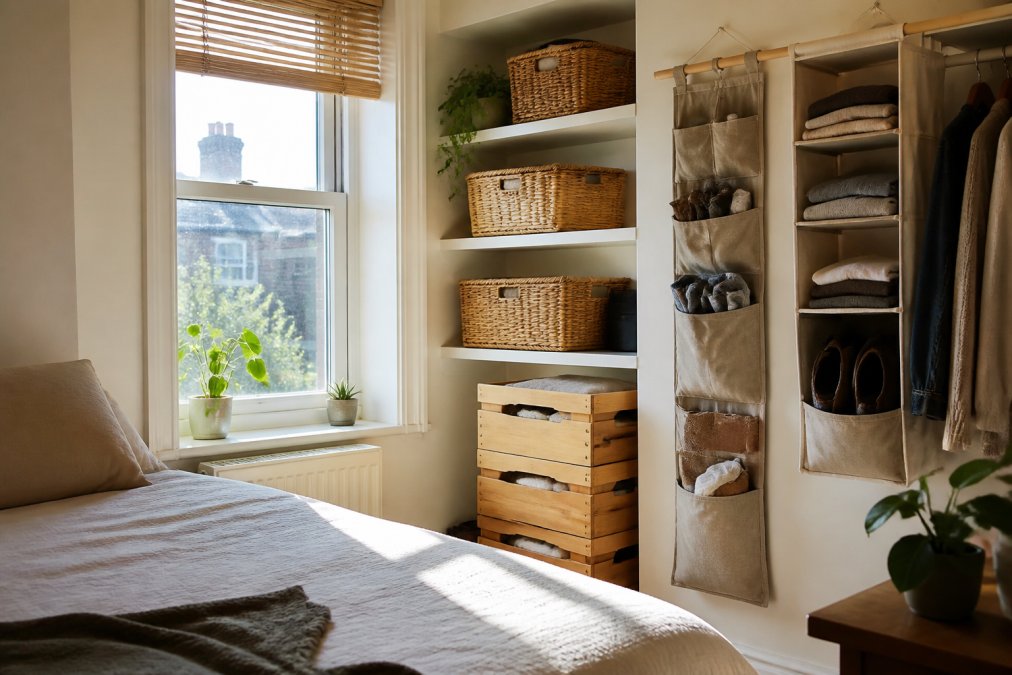
Vertical storage is non-negotiable in small flats. Wall-mounted shelving with baskets or boxes draws the eye upward and makes rooms feel taller. Under-bed storage using low-profile containers keeps items accessible without cluttering floor space. Corner solutions, tall, narrow shelving units or corner baskets, reclaim dead space that plastic bins would waste.
The key is choosing storage that complements your décor rather than competing with it. A sleek wooden crate system integrates into your room's aesthetic. Fabric storage boxes come in colours and textures that coordinate with furnishings. Wicker baskets add warmth and texture without the industrial feel of plastic.
Wicker and rattan baskets
Wicker and rattan baskets are among the most versatile storage alternatives to plastic bins. They work in any room, bedroom, living area, kitchen, or hallway, and age beautifully over time.
Wicker baskets offer natural breathability, making them ideal for storing items that benefit from air circulation, such as seasonal clothing or blankets. Rattan is slightly more durable than wicker and handles moisture better, though both materials require occasional dusting. The open weave of these baskets means you can see what's inside at a glance, reducing the temptation to overstuff.
Pros include their aesthetic appeal, durability across years of use, and natural ability to complement virtually any décor. They're lightweight enough to move easily but sturdy enough to hold substantial weight. Cons include vulnerability to moisture and dust accumulation in the weave. In damp environments, they may need protective treatment. They're also more expensive than plastic bins initially, though they outlast plastic by years.
For small flats, wicker baskets work best on open shelving, under tables, or as drawer organisers. Their natural texture adds visual warmth to compact spaces without making them feel cramped.
Wooden crates and boxes
Wooden crates offer industrial charm with genuine durability. Unlike plastic, wood actually improves with age, developing character and patina rather than becoming brittle or discoloured.
Wooden storage solutions range from rustic pallet-style crates to finished wooden boxes with clean lines. Some are designed for stacking, making them excellent for vertical storage in small flats. Others sit flat and double as side tables or display surfaces. The beauty of wood is its flexibility: you can paint, stain, or leave crates natural to match your style.
Wooden crates are heavier than plastic or wicker, so they work better in fixed locations rather than frequently moved spots. They handle weight well and won't sag or warp under pressure. The main drawback is that wood requires more maintenance than plastic, occasional refinishing prevents damage and keeps them looking intentional. They're also vulnerable to moisture and insects if not treated properly.
For small spaces, wooden crates work beautifully stacked in corners, under windows, or as part of a modular shelving system. They create visual interest and can be arranged in multiple configurations as your needs change.
ClosetCascade™ - Pack of Two →
Metal storage units
Metal storage, including steel shelving, wire baskets, and industrial-style boxes, offers durability and a distinctly modern aesthetic. Metal doesn't rot, warp, or degrade like plastic over time.
Metal storage solutions are particularly practical for damp environments like kitchens or bathrooms. They're easy to clean and resist moisture damage. Industrial metal shelving maximises vertical space efficiently and can hold substantial weight. Wire baskets provide visibility while maintaining airflow around stored items.
The trade-off is aesthetic: metal storage reads as utilitarian and industrial. In small flats with traditional or cosy décor, metal can feel out of place. However, in modern, minimalist, or industrial-style homes, metal storage becomes a design feature rather than a compromise.
Metal storage is typically lightweight and easy to assemble or reconfigure. It's durable enough to last decades with minimal maintenance. Cons include potential rust in humid environments and the cold, impersonal feel that doesn't suit all design preferences.
Fabric storage solutions
Fabric storage boxes and organisers offer a middle ground between plastic and natural materials. They're lightweight, collapsible for easy storage, and come in countless colours and patterns.
Fabric solutions work particularly well for items you access frequently, clothing, toys, books, or seasonal décor. Many fabric boxes are designed to fit standard shelving dimensions, making them excellent for small-space organisation. They're also affordable, making it easy to standardise your storage across multiple rooms.
The downside is durability. Quality fabric storage lasts several years, but it won't match the longevity of wood, wicker, or metal. Fabric also absorbs dust and odours more readily than other materials. In damp environments, fabric can develop mildew if not properly ventilated.
For small flats, fabric storage works best in closets, on shelves, or under beds where items are protected from direct moisture. The variety of colours and patterns means you can create a cohesive, intentional look across your storage system.
How to declutter a small flat before choosing new storage
Before investing in alternatives to plastic bins or other new storage solutions, ruthlessly evaluate what you actually own. Small spaces demand honest decisions about possessions. Storage alternatives to plastic bins work best when you're not trying to cram in excess.
Start by removing everything from your current storage. Categorise items into keep, donate, and discard. Be honest: if you haven't used something in a year and it doesn't make you happy, it's taking up space you don't have. This process often reveals that you need less storage than you think.
Once you've decluttered, measure your actual storage needs. How many seasonal items do you really keep? How much kitchen equipment do you regularly use? How many clothes fit your lifestyle? This assessment prevents you from over-investing in storage capacity.
Only after decluttering should you select storage solutions. You'll need fewer pieces, which means you can invest in higher-quality alternatives that last. A single beautiful wooden crate system beats a collection of plastic bins that gradually deteriorate.
Comparing durability and longevity across materials
Material choice directly affects how long your storage lasts. Plastic bins typically deteriorate within 5-7 years, becoming brittle, discoloured, and prone to cracking. They're designed for temporary use and show their age quickly.
Wicker and rattan baskets last 10-15 years with basic care. They require occasional dusting and protection from excessive moisture, but they age gracefully. A well-maintained wicker basket becomes more beautiful over time, developing a patina that adds character.
Wooden crates can last 20+ years if properly treated and maintained.
Vertical storage and hidden solutions for compact homes
Vertical thinking transforms small spaces. Wall-mounted shelving with storage baskets draws the eye upward and creates the illusion of height. Corner shelving units maximise otherwise wasted space. Tall, narrow storage solutions fit into awkward spaces without dominating a room.
Frequently Asked Questions
What are the best eco-friendly materials for storage alternatives to plastic bins?
Wicker, rattan, and sustainably sourced wood are excellent choices for environmentally conscious storage. These natural materials are biodegradable, durable, and often sourced from renewable resources. Metal storage units made from recycled materials also offer durability without plastic waste. Fabric organisers made from organic cotton or linen provide another eco-friendly option. Each material has different lifespans, so consider your storage needs and how long you plan to keep the items.
How can I maximise vertical storage in a small flat without using plastic bins?
Install wall-mounted wooden shelves, metal racks, or fabric wall organisers to use vertical space efficiently. Tall wooden cabinets or metal storage towers take up minimal floor space while offering substantial storage capacity. Over-door organisers in fabric or canvas work well for small items. Hanging storage solutions like fabric pocket organisers on walls or inside wardrobes keep items accessible without cluttering floors. Combining several vertical solutions tailored to different areas creates a cohesive storage system that feels intentional rather than cramped.
What's the difference between metal and wood storage for sustainable home organisation?
Wooden storage offers warmth, aesthetic appeal, and can last decades if made from quality timber. It's ideal for visible areas and blends well with most home décor. Metal storage provides industrial durability, moisture resistance, and a modern look, making it suitable for utility areas or contemporary spaces. Wood requires occasional maintenance to prevent warping, whilst metal may need rust prevention in humid environments. Both are more sustainable than plastic when sourced responsibly and can be repurposed or recycled at the end of their life.