

How to Create a Relaxing Home Environment: 7 Steps
Table of Contents
- What You'll Need Before You Start
- Step 1: Declutter for Mental Health and Clear Space
- Step 2: Get Your Lighting Tips for a Calm Home Right
- Step 3: Add the Best Indoor Plants for Relaxation
- Step 4: Layer in Comfort with Textiles and Warmth
- Step 5: Tune In to Scent and Sound
- Common Mistakes to Avoid When Creating a Relaxing Home
- Conclusion
- Frequently Asked Questions
Last Updated: September 12, 2026
What You'll Need Before You Start
Creating a relaxing home environment starts with a simple truth: you do not need to renovate or spend a fortune. You need a plan, a few focused hours, and the willingness to make small changes that compound.
At Inspree, we have watched how much difference the right objects make to how a room feels. Before you begin, gather these basics:
- A bin bag or donation box for decluttering
- Two or three warm-white bulbs (2700K) to replace harsh cool-white ones
- One or two low-maintenance indoor plants
- A soft throw or blanket
- A candle, diffuser, or essential oil you genuinely enjoy
That is the entire shopping list. Everything else in this guide is about sequencing, not spending.
Step 1: Declutter for Mental Health and Clear Space
Decluttering for mental health is the practice of removing visual noise from a room so your brain stops processing unfinished business every time you walk in. Clutter competes for attention, and attention is the resource you are trying to protect.
Start with one surface, not one room. The coffee table, the bedside table, the kitchen worktop. Clear it completely, then return only what you have used in the past week.
A common mistake is buying storage boxes before you have removed anything. That simply gives clutter a tidier home. Remove first, store second.
Work in 20-minute blocks. Most people find that two blocks a day for a week transforms a living room without any single session feeling overwhelming.
Step 2: Get Your Lighting Tips for a Calm Home Right
Lighting tips for a calm home come down to three variables: colour temperature, layers, and control. Get these right and almost any room feels softer within an evening.
Colour temperature is measured in Kelvin. Cool-white bulbs sit around 4000K and above, which suits tasks but reads as clinical in the evening (bsigroup.com). Warm-white bulbs at 2700K mimic the amber light of late afternoon and signal to your body that the day is winding down (the NHS).
Layers matter more than brightness. A single ceiling light flattens a room. Instead, combine:
- An overhead light on a dimmer, kept low
- A floor lamp for background glow
- A small table lamp or two at eye level when seated
Control is the third piece. Smart plugs and dimmer switches let you shift the mood without rewiring anything.
NHS guidance on sleep and lighting notes that light exposure affects sleep timing, which is why evening lighting choices matter beyond aesthetics. Where you can, avoid bright overhead light in the two hours before bed.
Step 3: Add the Best Indoor Plants for Relaxation
The best indoor plants for relaxation are the ones that survive your routine. A struggling plant creates guilt, not calm, so choose species that tolerate low light and irregular watering.
Reliable options for most homes:
- Snake plant, tolerant of low light and dry air
- ZZ plant, thrives on neglect
- Pothos, happy in most corners and easy to propagate
- Peace lily, prefers indirect light and visibly droops when thirsty
Place plants where you already look: beside your chair, on a windowsill, near the kettle. A plant you never see does nothing for your mood.
What most guides miss is scale. One large plant reads as calm. Six small ones on the same shelf read as clutter. Choose fewer, bigger plants and let them breathe.
Step 4: Layer in Comfort with Textiles and Warmth
Textiles do the emotional work in a room. Hard surfaces echo; soft surfaces absorb. Adding fabric is the fastest way to make a space feel held rather than hollow.
Start with what you touch most. A throw on the sofa, a rug underfoot, cushions you actually lean on. Wool, brushed cotton, and flannel all feel warmer than synthetic blends, and they age better.
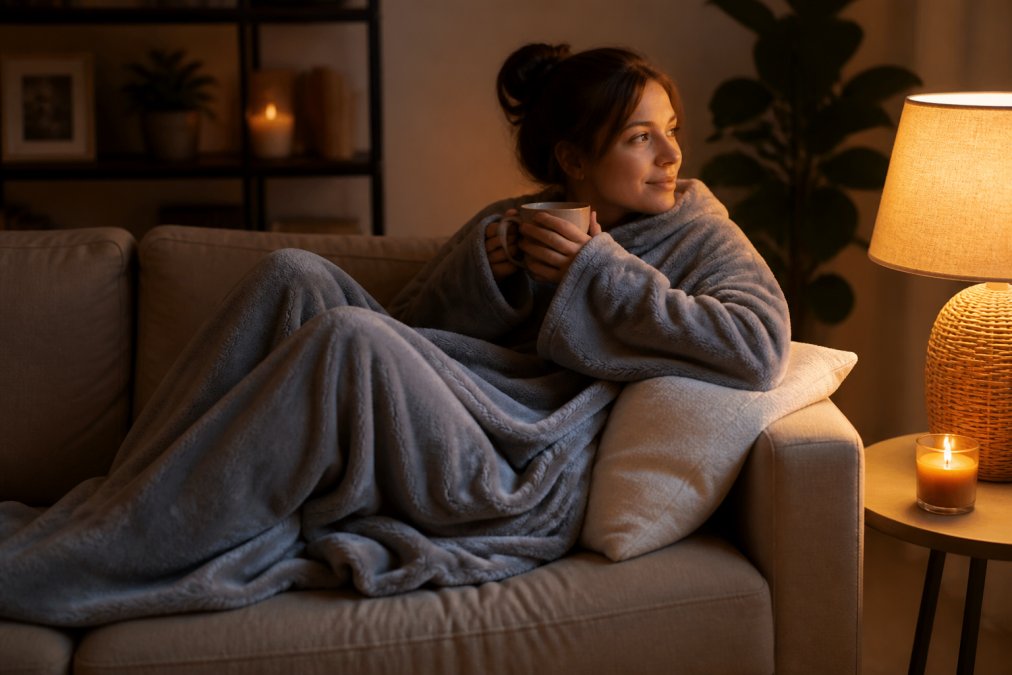
Weight matters as much as texture. A heavier blanket calms the nervous system in a way a thin one does not. This is why wearable blankets and sleeved throws have become so popular for evening wind-down: they wrap rather than drape.
For colder months, heated foot cushions and flannel nightwear extend that warmth into the parts of the evening you spend still. The SootheStep™️ Snuggly Sleeved Sofa Blanket (£75.85) is designed for exactly this, with sleeves that let you read or scroll without the blanket slipping. If you prefer something lighter, the SootheStep™ Electric Wearable Blanket (£59.95) offers the same idea in a more portable form.

Step 5: Tune In to Scent and Sound
Scent and sound are the two senses most people overlook, and they are often the fastest route to a shift in mood.
On scent, the rule is simple: one note at a time. Layering a candle, a diffuser, and a room spray creates a muddle. Pick a single scent family, such as cedar, lavender, or citrus, and stay with it through the evening.
Unscented candles still work if you want the flicker without the fragrance. The act of lighting something is itself a signal that the working day has ended.
On sound, the goal is masking, not entertainment. Steady, low-variation sound blocks the sharp interruptions that keep your attention alert:
- Brown noise or rain recordings for focus
- Instrumental music without lyrics for winding down
- Silence, if your home is already quiet
A common mistake is playing something you want to actively listen to. If you are following the lyrics, you are not relaxing.
Common Mistakes to Avoid When Creating a Relaxing Home
The biggest mistake is treating this as a shopping problem. A room full of new objects you did not need is still a cluttered room.
Other pitfalls worth naming:
- Doing it all at once. A weekend overhaul exhausts you and the changes do not stick. Small, repeatable adjustments last longer.
- Ignoring one room. If your bedroom is still bright and cluttered, no amount of living-room calm will help you sleep.
- Buying for the aesthetic only. A beautiful object that solves nothing becomes clutter within a month.
- Chasing someone else's version of calm. Minimalism suits some homes and feels cold in others. Warmth, texture, and soft light work in almost all of them.
If you are unsure whether a purchase will help, ask one question: does this reduce friction in my day? If the answer is no, leave it.
Conclusion
A relaxing home is built from small, repeatable choices rather than one big transformation. Clear the surfaces, warm the light, add something living, soften what you touch, and control what you smell and hear. None of it requires a large budget, and all of it works within a week.
Frequently Asked Questions
How can I make my home feel more relaxing without spending much money?
Start with what you already have. Declutter one surface at a time, open curtains to let in natural light, and move a lamp to a corner where it creates soft shadows rather than harsh glare. Adding a single plant or a scented candle can shift the mood of a room for very little. The goal is small, consistent changes rather than a full redesign.
What are the best colours for a relaxing home environment?
Soft, muted tones work best: sage green, warm grey, dusty blue, and off-white. These colours lower visual stimulation and make a room feel calmer. You do not need to repaint everything. Try introducing these shades through cushions, throws, or a single accent wall. Pair them with natural textures like wood or linen to keep the space feeling warm rather than clinical.
How does a cluttered home affect mental health?
Clutter competes for your attention every time you enter a room. That constant low-level visual noise can make it harder to switch off and can add to feelings of stress or overwhelm. Decluttering for mental health is not about perfection. Clearing one drawer, one shelf, or one corner gives your brain a visual break and makes the space feel easier to be in.
How can I use lighting to create a relaxing atmosphere at home?
Swap overhead lights for layered, lower-level lighting in the evening. Use table lamps, floor lamps, or dimmable bulbs at around 2700K to 3000K for a warm glow. Avoid cool white or blue-toned bulbs after sunset. If you work from home, keep a brighter task light for your desk but switch it off once you finish. The contrast between work light and rest light helps signal to your body that the day is winding down.
The hardest part is knowing which objects actually help. Inspree exists to answer that question, with a curated range of home and self-care products chosen for how they feel in daily use rather than how they photograph. Every order ships with tracked and insured delivery, checkout is SSL encrypted, and each item is selected by hand before it reaches the store. If you are ready to make your evenings feel different, browse the Inspree range and start with the one room you use most.