

How Long to Get Used to a Standing Desk
Table of Contents
- How Long Does It Take to Get Used to a Standing Desk
- Standing Desk Schedule for Beginners
- How Often to Alternate Between Sitting and Standing
- Standing Desk Adjustment Tips for a Smooth Transition
- Managing Standing Desk Fatigue and Leg Pain
- Common Mistakes to Avoid When Starting Out
- Frequently Asked Questions
Last Updated: October 6, 2026
How Long Does It Take to Get Used to a Standing Desk
When you get used to standing desk work, it takes time. Most people need between two and four weeks to feel comfortable standing for extended periods. Your body adapts gradually as your legs, feet, and core muscles strengthen.
The adjustment period varies based on how much you currently stand. If you spend most of your day sitting, expect a longer transition. Someone who already moves around regularly may adapt faster. The key is patience and a structured approach.
We understand that workspace comfort directly impacts your wellbeing. A standing desk can transform how you feel throughout the day, but rushing the transition often leads to discomfort and abandonment. This guide walks you through the adjustment process so you can make standing feel natural.
Your body sends clear signals during this transition. You might feel tired legs, foot soreness, or lower back tension in the first week. These sensations are normal. They don't mean standing desks don't work for you. They mean your muscles are waking up after prolonged sitting.
Standing Desk Schedule for Beginners
Your standing desk schedule should follow a gradual progression. Begin with just 20 to 30 minutes of standing per day during week one. This might seem short, but it's the right starting point for your body.
Here's a realistic weekly progression:
- Week 1: Stand for 20-30 minutes, three times per day
- Week 2: Stand for 30-45 minutes, three to four times per day
- Week 3: Stand for 45-60 minutes, four times per day
- Week 4: Stand for 60+ minutes, alternating throughout your day
By week four, many people find they can stand for longer stretches without discomfort. Some reach this point faster. Others need an extra week or two. Your pace depends on your fitness level and how much you currently stand.
Track how you feel each day. Keep notes about energy levels, foot soreness, and back tension. This feedback helps you adjust your schedule. If you experience sharp pain (not muscle fatigue), slow down your progression.
How Often to Alternate Between Sitting and Standing
The ideal pattern is switching every 30 to 60 minutes. Your body performs best when it changes position regularly rather than staying in one posture all day.
A practical alternating schedule looks like this:
- Stand for 30 minutes
- Sit for 20 minutes
- Stand for 30 minutes
- Sit for 20 minutes
This rhythm keeps your muscles engaged without exhausting them. It also maintains focus and energy throughout your workday.
Some people prefer standing for longer stretches. Others do better with shorter intervals. Experiment to find what feels right. The best schedule is one you'll actually follow.
Set a timer on your phone or computer. This removes the guesswork and keeps you honest. When the timer goes off, switch positions. You'll develop the habit naturally within two to three weeks.
Pay attention to your energy dips. Many people feel a natural slump in mid-afternoon. That's an ideal time to sit down. Standing during your peak energy hours works better than forcing yourself to stand when you're already tired.
Standing Desk Adjustment Tips for a Smooth Transition
Proper desk setup makes the biggest difference in how quickly you adapt. Your monitor should sit at eye level when you stand. Your elbows should bend at roughly 90 degrees when your hands rest on the keyboard.
Invest in a quality anti-fatigue mat. This simple addition reduces foot and leg soreness dramatically. The mat cushions your feet and encourages subtle movement that engages your muscles. You'll notice the difference within days.
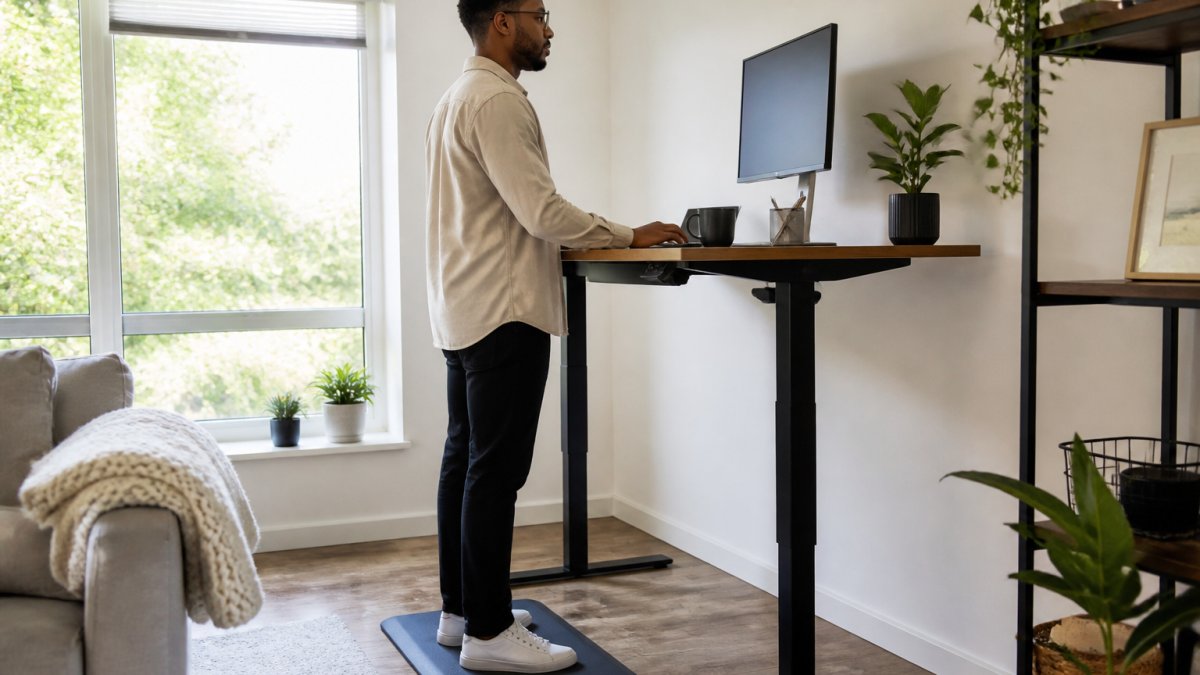
Wear supportive shoes during your standing desk transition. Avoid flat shoes or unsupportive trainers. Your feet need proper arch support as they adapt to standing. Good shoes reduce pain and speed up adjustment.
Start standing during your easiest work tasks. Don't attempt standing while you're in a difficult meeting or doing complex problem-solving. Stand during email responses, reading, or routine tasks. This keeps your cognitive load low while your body adapts.
Keep water nearby and stay hydrated. Standing increases circulation and can make dehydration more noticeable. Drinking water also gives you a reason to move and adjust your position throughout the day.
Stretch regularly. Simple calf stretches, hip flexor stretches, and gentle back extensions take 30 seconds but make a real difference. Stretching prevents tightness and speeds recovery.
Managing Standing Desk Fatigue and Leg Pain
Leg fatigue during your first week is expected. Your calf muscles, quadriceps, and glutes are working harder than they have in months. This fatigue feels uncomfortable but indicates your muscles are strengthening.
Distinguish between muscle fatigue and sharp pain. Muscle fatigue feels like heaviness or tiredness. Sharp pain in your knees, ankles, or lower back signals a problem. If you experience sharp pain, sit down immediately and reassess your posture and desk height.
Elevate your feet when you sit down. This reduces swelling and speeds recovery. Even five minutes with your feet up helps. Your legs will feel fresher for your next standing session.
Apply ice to sore areas if needed. Ten minutes of ice after standing can reduce inflammation. Many people find this helpful during the first two weeks.
Compression socks provide genuine relief for some people. They improve circulation and reduce leg heaviness. If you're flying or standing for extended periods, compression socks can be worth trying.
Listen to your body. Some soreness is normal. Persistent sharp pain isn't. If pain doesn't improve after two weeks, consult a healthcare professional. You might need to adjust your desk height or add more cushioning.
Common Mistakes to Avoid When Starting Out
The biggest mistake is standing too long too soon. People often think "I'll just stand for the whole day." This approach guarantees failure. Your body isn't ready. You'll feel miserable and go back to sitting permanently.
Don't skip the anti-fatigue mat. This investment pays for itself in comfort. Without proper cushioning, your feet hurt more, your legs tire faster, and your adjustment period stretches longer.
Avoid standing with poor posture. Slouching while standing strains your lower back more than slouching while sitting. Stand tall with your shoulders back. Engage your core gently. Good posture during standing feels harder initially but becomes natural quickly.
Don't ignore desk height. If your desk is too high or too low, your shoulders, neck, and wrists suffer. Take time to adjust your desk properly before you start. This single factor determines much of your comfort.
Stop comparing your timeline to others. Your colleague might adapt in one week. You might need four weeks. Both are normal. Your body's pace is your body's pace. Pushing faster creates unnecessary pain.
Resist the urge to stand during your most demanding work. Save standing for routine tasks while you're adjusting. Once you're comfortable, you can stand during more complex work.
How long does it take to get used to a standing desk? Most people who get used to standing desk routines feel genuinely comfortable within four weeks when they follow a gradual progression. Your adjustment depends on your starting fitness level, desk setup, and commitment to alternating positions.
The research on workplace ergonomics shows that proper desk positioning reduces musculoskeletal strain significantly. Starting slowly and building gradually gives your body time to adapt without triggering injury or excessive discomfort.
Inspree offers a carefully curated selection of workspace essentials designed to support your transition. From anti-fatigue mats to ergonomic accessories, we've chosen products that genuinely improve comfort and reduce adjustment time.
Your standing desk journey is personal. Be patient with yourself. Track your progress week by week. Within a month, standing will feel as natural as sitting. You'll wonder how you ever worked sitting down all day.
Frequently Asked Questions
How long does it take to get used to a standing desk?
Most people need between 2 to 4 weeks to adapt comfortably to standing desk work. Your body gradually builds the muscle endurance and postural awareness required for standing. The adjustment period varies based on how frequently you stand and your current fitness level. Starting with just 30 minutes of standing per day and gradually increasing helps your legs, feet, and lower back adjust without overwhelming discomfort.
How often should you alternate between sitting and standing during the day?
A common starting pattern is to alternate every 30 minutes between sitting and standing. As you build endurance over the first few weeks, many people extend standing intervals to 45 or 60 minutes. The key is movement and variation rather than staying in one position too long. Listen to your body; if you feel fatigue building, switch positions sooner. This rhythm prevents muscle fatigue and helps you maintain better focus throughout the day.
Why do my legs hurt when I use a standing desk?
Leg pain during the adjustment period is common and typically stems from muscles that aren't accustomed to sustained standing. Your calves, quadriceps, and feet bear weight they're not used to, causing soreness and fatigue. This discomfort usually subsides within the first few weeks as your muscles strengthen. Wearing supportive shoes, using an anti-fatigue mat, and taking regular sitting breaks can ease this pain. If severe pain persists beyond 4 weeks, consider consulting a healthcare professional to rule out other issues.
What are the best standing desk adjustment tips for beginners?
Start by setting your desk height so your elbows bend at roughly 90 degrees when your arms rest at your sides. Your monitor should be at eye level to prevent neck strain. Wear comfortable, supportive shoes and consider an anti-fatigue mat to reduce foot and leg stress. Begin with short standing intervals (15-30 minutes) and gradually increase as your body adapts. Keep a footrest or small stool nearby to occasionally elevate one leg, which shifts weight and reduces strain.