

Self-Care Products for Sensitive Skin: A Curated Guide
Table of Contents
- Why Self-Care Products for Sensitive Skin Require a Different Approach
- Soothing Ingredients for Reactive Skin That Actually Work
- How to Patch Test Skincare Products Safely Before Full Use
- Building a Gentle Skincare Routine for Sensitive Skin
- Essential Self-Care Products for Sensitive Skin That Deliver Results
- What to Avoid: Common Mistakes People Make with Sensitive Skin
- Frequently Asked Questions
Last Updated: September 28, 2026
Why Self-Care Products for Sensitive Skin Require a Different Approach
When choosing self-care products for sensitive skin, isn't just uncomfortable, it's unpredictable. One product soothes your complexion, another triggers redness and irritation within hours. This happens because sensitive skin has a compromised moisture barrier, meaning it reacts more intensely to ingredients and environmental stressors that others might tolerate without issue.
The challenge with self-care products for sensitive skin is that most mainstream options are formulated for resilient skin types. They contain fragrance, alcohol, or active ingredients at concentrations that work fine for most people but overwhelm reactive skin. Finding genuinely calming products requires a different strategy entirely, one that prioritises barrier repair and soothing ingredients over trendy actives.
Self-care products for sensitive skin need to do three things simultaneously: cleanse without stripping, calm inflammation, and strengthen your skin's protective layer. This guide walks you through the ingredients that actually work, how to introduce new products safely, and the self-care essentials that deliver visible results without causing flare-ups.
Soothing Ingredients for Reactive Skin That Actually Work
The most effective soothing ingredients for reactive skin share one common trait: they calm inflammation without irritating further. Centella asiatica (also called cica) is one of the most reliable options. It strengthens the skin barrier, reduces redness, and has been used in skincare for centuries across East Asian cultures.
Niacinamide is another powerhouse for sensitive skin. This form of vitamin B3 reduces inflammation, minimises pore appearance, and helps regulate sebum production, all without the irritation that comes with harsher actives. Many people with reactive skin tolerate niacinamide at 4-5% concentrations without issue.
Ceramides deserve special mention because they're fundamental to barrier repair. Your skin's outer layer is made up of lipids, including ceramides. When your barrier is compromised, ceramides are depleted. Replenishing them with products containing ceramide NP, AP, or EOP directly addresses the root cause of sensitivity.
Hyaluronic acid hydrates without heaviness. It holds up to 1000 times its weight in water, drawing moisture into the skin and plumping the complexion. For sensitive skin, this ingredient is typically gentle across all concentrations.
Avoid fragrance, essential oils, and alcohol denat, these are common irritants that destabilise reactive skin further. Even "natural" essential oils can trigger flare-ups because they're concentrated plant extracts with high volatile compound levels.
How to Patch Test Skincare Products Safely Before Full Use
Patch testing is non-negotiable when you have sensitive skin. A patch test reveals how your skin will react to a new product before you apply it across your entire face. This simple practice prevents costly mistakes and unnecessary inflammation.
Start by applying a small amount of the new product to a discreet area, the inner arm or behind the ear works well. Leave it on for 24 hours without washing it off. If redness, itching, or burning develops within that timeframe, the product isn't right for your skin. If nothing happens, you can cautiously introduce it to your routine.
When you do introduce a patch-tested product to your full routine, use it just once or twice per week initially. Increase frequency gradually over 2-3 weeks. This slow introduction gives your skin time to adjust without shocking your barrier. Many people rush this step and then blame the product when their skin reacts, the reaction is usually from introducing too much change too quickly.
Keep a simple log of what you're testing and how your skin responds. Note the date, product name, and any reactions. This record becomes invaluable if you need to troubleshoot later or identify patterns in what triggers your sensitivity.
Building a Gentle Skincare Routine for Sensitive Skin
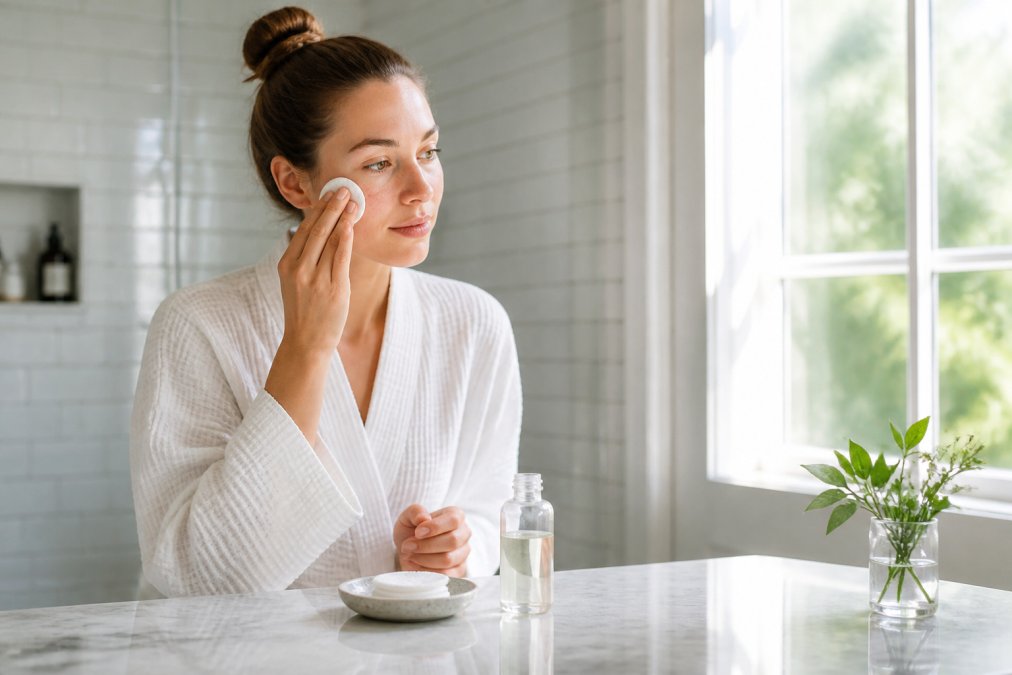
A bare-bones routine is your best friend when you have reactive skin. More steps mean more potential irritants, so start with the essentials: a gentle cleanser, a calming treatment, and a protective moisturiser with SPF during the day.
Your cleanser should be fragrance-free and non-stripping. Cream or milk cleansers are typically gentler than gels or foaming formulas because they don't strip your skin's natural oils. Lukewarm water is essential, hot water damages the barrier further, whilst cold water can shock sensitive skin.
After cleansing, apply your soothing product while your skin is still slightly damp. This helps your skin absorb the treatment and lock in hydration. A serum containing niacinamide or centella works well here. Layer it with a good moisturiser that contains ceramides and hyaluronic acid.
At night, you can add one additional step if needed, perhaps a heavier occlusive cream or a targeted treatment. But keep it simple. Most people with sensitive skin see better results with a 3-step routine than a 10-step one because fewer products mean fewer potential triggers.
Sunscreen is non-negotiable, even on cloudy days. UV damage weakens your barrier further, making sensitivity worse over time. Choose a mineral sunscreen if you find chemical sunscreens irritating, they tend to be gentler for reactive skin.
Essential Self-Care Products for Sensitive Skin That Deliver Results
When you're shopping for self-care products for sensitive skin, look for formulations designed specifically for reactive skin types. Generic "all-skin-types" products rarely deliver the barrier support sensitive skin needs.
Mulberry Silk Light Blocking Sleep →
A good cleanser for sensitive skin removes makeup and daily grime without disrupting your skin's pH or stripping essential oils. Cream cleansers and micellar waters are typically gentler than foaming formulas. Apply with your fingertips rather than a flannel to avoid physical irritation.
Your moisturiser should be the foundation of your routine. A good one for sensitive skin contains ceramides, hyaluronic acid, and a calming ingredient like centella or niacinamide. Apply it to damp skin to maximise absorption. Many people underestimate how much moisturiser their sensitive skin needs, a richer formula often prevents irritation better than a lightweight one.
A targeted treatment serum can address specific concerns like redness or dryness. Niacinamide serums are particularly effective for sensitive skin because they calm inflammation whilst strengthening your barrier. Look for serums with 4-5% niacinamide for noticeable results without irritation.
Sunscreen is a self-care essential, not optional. Daily sun protection prevents UV damage that would otherwise worsen your sensitivity. Mineral sunscreens with zinc oxide or titanium dioxide tend to irritate sensitive skin less than chemical formulas.
Sleep Support and Comfort
Quality sleep supports skin healing and regeneration. When you're stressed or sleep-deprived, your skin barrier weakens and sensitivity increases. Creating a calming bedtime routine helps both your sleep and your skin.
A silk pillowcase reduces friction against your skin whilst you sleep, minimising irritation from rubbing. Unlike cotton, silk doesn't absorb moisture from your skin, helping you wake up with better hydration. The Mulberry Silk Light Blocking Sleep Eyemask from Inspree (£18.99) blocks unwanted light that interferes with sleep quality, allowing your skin to repair undisturbed through the night. Quality sleep is one of the most underrated self-care practices for sensitive skin recovery.

Keep your bedroom cool and dark. A cooler environment supports better sleep and reduces inflammation. Blackout curtains or a sleep mask help maintain consistent darkness, which supports melatonin production and skin repair.
What to Avoid: Common Mistakes People Make with Sensitive Skin
The biggest mistake people make with sensitive skin is over-treating it. They assume more products and more actives will solve the problem faster. In reality, sensitive skin needs simplicity and consistency, not complexity.
Avoid products with fragrance, even "natural" fragrance from essential oils. Fragrance molecules are volatile and penetrate the skin easily, triggering inflammation in reactive skin. This includes scented moisturisers, toners, and serums, fragrance-free formulations deliver better results.
Stop exfoliating regularly if you have sensitive skin. Physical exfoliation with scrubs or brushes damages your barrier further. Chemical exfoliation with AHAs or BHAs can work, but only at low concentrations and infrequent intervals, think once weekly at most, not daily. Many people with sensitive skin do better without any exfoliation.
Don't switch products constantly. Your skin needs at least 4-6 weeks to adjust to a new product before you can fairly assess whether it works. Changing products weekly or monthly prevents your skin from stabilising.
Avoid hot water when cleansing. It strips your skin's natural oils and damages your barrier. Use lukewarm water instead, even though it feels less satisfying psychologically.
Don't skip moisturiser thinking it will make your skin less oily. Dehydrated skin often produces excess oil as a compensation mechanism. A good moisturiser actually reduces oiliness by addressing the underlying dehydration.
Finding self-care products for sensitive skin that actually work requires patience and a strategic approach.
Frequently Asked Questions
How do I patch test new skincare products safely?
Apply a small amount of the product to a discreet area like behind your ear or on your inner arm. Wait 24-48 hours and watch for redness, itching, or irritation. If no reaction occurs, you can gradually introduce it into your full routine. Always patch test one new product at a time so you know which one caused any issues. This simple step prevents wasting money on products that aggravate your skin.
What ingredients should I avoid if I have sensitive skin?
Common irritants include fragrance, alcohol, sulphates, and essential oils. Strong preservatives like parabens can trigger reactions in some people. Avoid products with high concentrations of active ingredients like vitamin C or retinol unless specifically formulated for sensitive skin. Instead, look for products with minimal ingredients and those labelled 'hypoallergenic' or 'dermatologist-tested'. Reading ingredient lists carefully protects your skin barrier.
Which ingredients are best for soothing reactive skin?
Centella asiatica (cica) is excellent for calming inflammation and strengthening the skin barrier. Niacinamide reduces redness and supports skin health without irritation. Aloe vera provides hydration and soothing relief. Chamomile and oat extract are gentle botanicals that reduce sensitivity. Hyaluronic acid hydrates without heaviness. Look for products featuring these ingredients to effectively soothe reactive skin while maintaining a healthy barrier.
Can I build a gentle skincare routine that actually works for sensitive skin?
Yes, a simple routine works best: cleanse with a mild, fragrance-free cleanser, apply a hydrating toner or essence, use a gentle moisturiser, and always wear SPF during the day. Avoid layering too many products at once. Start with a three-step routine and add products slowly, patch testing each one. Quality over quantity matters, a few well-chosen products designed for sensitive skin deliver better results than a complicated routine with many potential irritants.