

Humidifiers vs Air Purifiers for Dry Air
Table of Contents
- Humidifiers vs Air Purifiers: Understanding the Difference
- Signs of Low Humidity in the Home
- How Portable Humidifiers Work for Dry Air
- How Air Purifiers Address Indoor Air Quality
- Humidifiers vs Air Purifiers: Which One Do You Need?
- Best Portable Humidifier for Bedrooms and Living Spaces
- How to Maintain Optimal Indoor Humidity Levels
- Making Your Decision: Practical Considerations
- Frequently Asked Questions
Last Updated: 2 September 2026
Humidifiers vs Air Purifiers: Understanding the Difference
A humidifier adds moisture to the air. An air purifier removes contaminants from it. These serve fundamentally different purposes, and choosing the wrong one means your discomfort persists. At Inspree, we help busy professionals and families find the right solutions for everyday comfort challenges. The distinction matters more than you might think, especially when dry air is causing visible symptoms like skin irritation, respiratory discomfort, or static electricity issues.
The real question isn't whether one device is better than the other. It's whether your home needs moisture added, contaminants removed, or ideally, both. This guide breaks down exactly how each device works, what problems they actually solve, and how to decide which one belongs in your space.
Signs of Low Humidity in the Home
Low humidity creates a cascade of problems that most people attribute to other causes. Your skin feels tight and flaky. Your lips crack without explanation. Wooden furniture and floors start to warp slightly.

Humidity levels below 30 percent create an environment where moisture evaporates from everything, including your skin and respiratory tissues (the CDC). You'll notice static electricity shocks when you touch metal objects or other people. Your throat feels scratchy, especially in the morning. Allergies and asthma symptoms often worsen because dry air irritates airways and makes it harder for your body's natural defences to work properly.
Indoor heating during winter months is the primary culprit in colder climates. As outdoor air is drawn in and heated, its relative humidity drops dramatically. A room at 20°C with 50 percent relative humidity outdoors might drop to just 15 percent once heated indoors (peer-reviewed research). This is why dry air problems intensify during heating season.
Wooden items suffer too. Hardwood floors can shrink and develop gaps. Musical instruments go out of tune. Picture frames warp. Once you notice these signs, a humidifier becomes less of a luxury and more of a practical necessity for protecting both your health and your belongings.
How Portable Humidifiers Work for Dry Air
A portable humidifier takes water from its tank, transforms it into water vapour, and releases it into the air. This increases the relative humidity of your room, restoring moisture levels to a healthier range.
There are three main types of portable humidifiers. Ultrasonic humidifiers use vibrations to break water into tiny droplets, creating a cool mist. Evaporative humidifiers draw air through a moistened wick, allowing water to evaporate naturally into the room. Warm mist humidifiers heat water to create steam, which raises humidity while also warming the air slightly.
For dry air specifically, ultrasonic and evaporative models work well because they don't add heat to your space. Warm mist humidifiers are useful if you want both humidity and warmth, but they consume more electricity and pose a slight burn risk if you have young children or pets nearby.
Portable humidifiers work best in enclosed spaces. A single unit can effectively humidify a bedroom or small office, but trying to humidify an entire open-plan living area with one device usually fails. Most portable models hold between 2 and 6 litres of water and run for 8 to 24 hours per tank, depending on mist output settings.
The key advantage of portable humidifiers is their flexibility. You can move them between rooms, target the spaces where you spend the most time, and adjust humidity levels based on seasonal needs. They're also significantly cheaper than whole-house humidification systems.
How Air Purifiers Address Indoor Air Quality
Air purifiers tackle an entirely different problem. They remove particles, allergens, and contaminants from the air, dust, pollen, pet dander, smoke particles, and sometimes bacteria or viruses. They do nothing to add moisture. If your air is dry, an air purifier won't solve that problem, no matter how effective it is at cleaning the air.
Most portable air purifiers use HEPA filters, which trap particles as air passes through them. Some models include activated carbon filters to remove odours and volatile organic compounds. The air enters the device, passes through one or more filter stages, and exits cleaner.
Air purifiers become essential if you live in an area with poor outdoor air quality, have pets that shed heavily, suffer from allergies, or want to reduce indoor pollutants from cooking, cleaning products, or off-gassing from new furniture. They're particularly valuable for people with asthma, hay fever, or other respiratory conditions.
The confusion arises because dry air and poor air quality sometimes occur together. Your air might be both dry and polluted. In that case, you need both a humidifier and an air purifier, as they work on different problems and complement each other.
Humidifiers vs Air Purifiers: Which One Do You Need?
The answer depends entirely on your symptoms and what's actually causing your discomfort. Ask yourself: Is your skin dry and irritated? Do you experience static shocks? Is your throat scratchy, especially at night? Do wooden items in your home show signs of moisture loss? If you answered yes to any of these, you need a humidifier.
Now ask different questions: Do you have allergies or asthma symptoms that worsen indoors? Do you notice dust accumulation on surfaces? Can you smell cooking odours or other indoor pollutants lingering? Do you have pets that shed? If these resonate with you, an air purifier addresses your actual problem.
Here's the practical reality: most homes benefit from a humidifier during colder months when heating systems dry out the air, and many homes benefit from an air purifier year-round if anyone has respiratory sensitivities. The two devices solve different problems, so choosing between them is a false choice.
Consider your climate and season. In warm, humid regions, you might never need a humidifier but could benefit from an air purifier. In cold, dry climates, a humidifier becomes essential during winter. In urban areas with poor air quality, an air purifier becomes non-negotiable, and a humidifier addresses the separate issue of dry indoor air during heating season.
| Device | Primary Function | Best For | Addresses Dry Air? | Addresses Air Quality? |
|---|---|---|---|---|
| Portable Humidifier | Adds moisture to air | Dry skin, static electricity, respiratory irritation | Yes | No |
| Air Purifier | Removes contaminants | Allergies, asthma, dust, odours, pollution | No | Yes |
| Both Together | Optimal indoor environment | Comprehensive comfort and health | Yes | Yes |
Best Portable Humidifier for Bedrooms and Living Spaces
If you've determined that dry air is your problem, a portable humidifier designed for bedrooms and living spaces offers the right balance of capacity, noise level, and effectiveness.
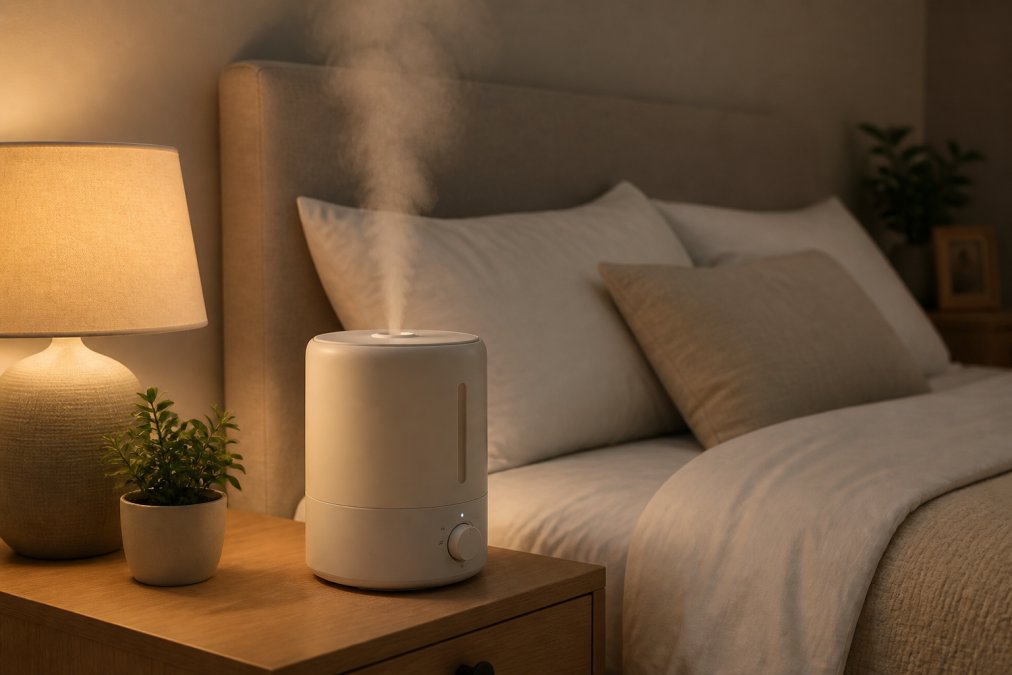
Ultrasonic humidifiers are popular for bedrooms because they operate nearly silently and produce cool mist, which won't make your room uncomfortably warm. Most models include adjustable mist output, allowing you to dial in exactly how much moisture you need. Capacity typically ranges from 2 to 4 litres, sufficient for 8 to 12 hours of continuous operation.
Evaporative humidifiers work differently but suit bedrooms equally well. They're quieter than some warm mist models and naturally regulate humidity, they stop producing mist once the room reaches saturation. This prevents over-humidification, which can encourage mould growth.
When selecting a portable humidifier for your bedroom or living space, consider room size first. A small 2-litre unit works for bedrooms and offices up to about 20 square metres. Larger living spaces need 4 to 6-litre models or multiple units. Check the noise level, anything under 30 decibels runs quietly enough for sleeping. Look for models with auto shut-off when the tank empties.
Inspree offers a selection of portable humidifiers designed specifically for bedroom comfort and living space use. Each model is chosen for reliability, ease of maintenance, and effectiveness at restoring healthy humidity levels.
How to Maintain Optimal Indoor Humidity Levels
Once you've added a humidifier to your space, maintaining the right humidity level becomes important. The ideal range is between 30 and 50 percent relative humidity (the CDC). Below 30 percent, you experience dry air problems. Above 50 percent, you risk moisture accumulation, mould growth, and dust mite proliferation.
A simple hygrometer, a device that measures humidity, costs just a few pounds and provides invaluable feedback. Many modern humidifiers include built-in hygrometers, showing you real-time humidity levels. This takes the guesswork out of operation.
Seasonal adjustments matter. During winter heating season, you'll likely run your humidifier daily, sometimes continuously. In spring and autumn, you might use it only occasionally. Summer humidity from outdoor air often makes indoor humidification unnecessary.
Maintenance keeps your humidifier working effectively. Empty and refill the tank daily to prevent bacterial growth. Clean the water tank weekly with mild soap and water. Replace the wick or filter according to the manufacturer's recommendations, typically every 30 to 60 days depending on water hardness. Using distilled water extends the life of your device and improves performance.
Position your humidifier centrally in the room you're treating. Placing it in a corner or against a wall reduces its effectiveness. Keep it away from electronics, wooden furniture, and walls, as excessive moisture can damage them.
Making Your Decision: Practical Considerations
Deciding between a humidifier and air purifier, or whether you need both, comes down to identifying your actual problem, understanding your climate, and considering your budget. Start by diagnosing what's bothering you. Dry skin and static electricity point to a humidifier. Allergies, dust, or odours point to an air purifier.
If you live in a dry climate or experience heating-season dryness, a portable humidifier is a practical investment that solves a real problem. If you have respiratory sensitivities, live in an urban area with air quality concerns, or have pets, an air purifier becomes essential. Many households benefit from both devices operating in the same space.
Budget considerations are straightforward. Quality portable humidifiers range from modest to mid-range pricing. Rather than viewing them as competing purchases, think of them as complementary investments in your home's comfort and health.
Room size determines which device works best for your space. Small bedrooms need only a compact humidifier. Larger living areas might need a bigger capacity unit or multiple devices. Air purifiers similarly depend on room size, check the manufacturer's coverage area.
Noise level matters if you plan to use the device while sleeping or working. Ultrasonic humidifiers run almost silently. Many air purifiers operate at 40 to 50 decibels, which some people find intrusive during sleep.
The maintenance burden differs between devices. Humidifiers require regular cleaning and weekly tank maintenance to prevent bacterial growth. Air purifiers need periodic filter replacement but less frequent hands-on cleaning.
When dry air is affecting your comfort and health, choosing the right solution makes all the difference. A portable humidifier directly addresses moisture loss, restoring humidity levels to a healthier range and eliminating the scratchy throat, dry skin, and static electricity that plague dry indoor environments. Inspree's selection of portable humidifiers for bedrooms and living spaces combines reliable performance with thoughtful design, helping you create the comfortable, healthy home environment you deserve. Explore our range today and discover how the right humidifier transforms your daily comfort.
Frequently Asked Questions
Q: Can an air purifier help with dry air?
A: Air purifiers are designed to remove pollutants, dust, and allergens from the air, but they don't add moisture. In fact, some air purifiers can slightly reduce humidity levels as they circulate air. If your primary concern is dry air, a humidifier is the better choice. However, if you need both clean air and moisture, you can use both devices together in the same room.
Q: What are the signs of low humidity in the home?
A: Common indicators include dry, itchy skin, static electricity shocks, cracked wooden furniture, peeling wallpaper, and increased respiratory discomfort. You may also notice dry nasal passages or sore throats, especially during winter months. A hygrometer (humidity monitor) can measure exact levels; ideal indoor humidity sits between 30-50%. If your home feels uncomfortably dry, a portable humidifier can help restore balance.
Q: Can you run a humidifier and an air purifier at the same time?
A: Yes, you can safely operate both devices simultaneously in the same room. A humidifier adds moisture while an air purifier removes pollutants, so they serve complementary purposes. Place them a short distance apart to avoid the air purifier pulling moist air directly from the humidifier. This combination works well for those dealing with both dry air and poor air quality, providing comprehensive environmental control.
Q: How do I choose between a humidifier and an air purifier for my needs?
A: Start by identifying your primary concern: if dry skin, static, or respiratory dryness bothers you, choose a humidifier. If allergies, dust, or odours are the issue, select an air purifier. Consider room size, maintenance requirements, and noise levels. For bedrooms, a quiet humidifier often works best. If you're unsure, assess your symptoms and test one device first, then add the other if needed. Check product reviews to match features with your specific situation.
This article was written using GrandRanker