

How to Choose Stress Relief Products: A Practical Guide
Table of Contents
- Start With Your Stress Pattern, Not the Product
- The Main Types of Stress Relief Products
- Stress Relief Toys: What They Can and Cannot Do
- Building a Set of Stress Management Tools That Works
- Sensory Products for Anxiety: Choosing With Care
- Relaxation Products for Home: Where They Fit in Your Day
- How to Judge Whether a Stress Relief Product Is Worth It
- Conclusion
- Frequently Asked Questions
Last Updated: 18 October 2026
Start With Your Stress Pattern, Not the Product
Most people buy stress relief products backwards. They spot a neat gadget, order it, use it twice, and then it lives in a drawer. The better approach is to work out what your stress actually feels like first. Is it a tight neck after nine hours at a screen? Racing thoughts at midnight? A knot in your stomach before a meeting?
Knowing your pattern tells you which category to shop in. A fidget toy will not fix shoulder tension. A candle will not quiet a pounding headache. At Inspree, we see this play out constantly: the customers who get the most from a purchase are the ones who matched the item to a specific problem.
So before you browse, write down three things:
- Where you feel stress in your body
- When it tends to hit (morning, desk hours, bedtime)
- What you already do to cope, and whether it works
That short list is your shopping filter. Everything below builds on it.
The Main Types of Stress Relief Products
Stress relief products fall into a few broad groups, and each one suits a different kind of tension. Here is the quick version before we go deeper.
| Product type | Best for | Typical use | Watch out for |
|---|---|---|---|
| Wearable and heat-based | Physical tension, cramps, headaches | 15-30 minutes at a time | Needs a power source or warm-up |
| Ambient and sensory | Winding down, sleep, atmosphere | Evenings and bedtime | Effects are subtle, not instant |
| Stress relief toys | Restless hands, focus breaks | Short bursts at your desk | Will not fix deeper anxiety |
| Home relaxation items | Building a daily wind-down routine | End of the working day | Easy to buy and forget |
Wearable and Heat-Based Options
Heat-based products are the most direct fix for physical stress. They warm a specific area, and that warmth helps muscles loosen. The key is targeted heat rather than a general "relaxing" promise.
Take the Lumo Relief™ Heated Migraine Mask (£18.00). It is built to relieve eye strain, migraines and tension headaches in 15 minutes. That is a clear, specific job. If your stress shows up as a tight forehead and sore eyes after screen time, this fits. If your stress is in your lower back, it does not.

For period cramps, the TummySoothe™ Heated Belt (£23.99) wraps warmth around your lower tummy. It has three heat settings and a soft belt that stays put, so you are not clutching a hot-water bottle all day. It runs off a USB power source.
Ambient and Sensory Items
Ambient products change the feel of a room rather than targeting a body part. Think warm lighting, soft scents, and objects that look calming. They work best as part of a routine, not as a one-off fix.
The AuraGlow™ Crystal Healing Candle (£14.99) is a good example. It creates a warm, relaxing atmosphere, and the crystals inside make it something you enjoy looking at. One customer described the scent as "divine" and said it was "perfect for creating a relaxing atmosphere."
These items are subtle. Do not expect a candle to erase a stressful day. Expect it to mark the end of the working day and signal to your brain that it is time to switch off.
Stress Relief Toys: What They Can and Cannot Do
Stress relief toys are small objects you fiddle with to burn off restless energy. They help with focus and short breaks, and that is about it. A fidget tool will not treat anxiety, and no toy replaces proper rest or support.
What they do well:
- Give your hands something to do during long calls
- Break the habit of nail-biting or desk-tapping
- Offer a 30-second reset between tasks
What they cannot do:
- Calm a racing mind on their own
- Replace sleep, movement, or medical advice
- Fix a stressful job or situation
The honest test is simple. Use a toy for a week. If you reach for it without thinking, it is earning its place. If you have to remind yourself it exists, it is clutter. That rule applies to every stress management tool you buy.
Building a Set of Stress Management Tools That Works
A single product rarely solves stress, because stress rarely comes from one place. A better plan is a small set of stress management tools, each covering a different moment in your day.
Try this three-part structure:
AuraGlow™ Crystal Healing Candle →
- Desk reset: something for physical tension, like a heated mask or a neck support
- Evening wind-down: something ambient, like a candle or soft lighting
- On-the-go: something small and portable for stressful moments out of the house
Keep the set small. Three or four items you actually use beat ten you forget about. When you are choosing, ask whether each item covers a moment the others do not.
Sensory Products for Anxiety: Choosing With Care
Sensory products for anxiety are items that engage touch, smell, sight or sound to help you feel calmer. They can support a wind-down routine, but they are not a treatment for anxiety. If anxiety is affecting your daily life, speak to your GP.
When choosing sensory products for anxiety, look for:
- A clear purpose (calming scent, warm light, something to hold)
- Quality materials that feel good against your skin
- A size that fits where you will actually use it
- Honest claims, not promises to "cure" anything
Be wary of any product that claims to treat a health condition. Heat and scent may help you feel more comfortable, but they do not treat an underlying condition. That is true of the heated items above too: they ease symptoms, and you should seek medical advice for severe or unusual pain.
Relaxation Products for Home: Where They Fit in Your Day
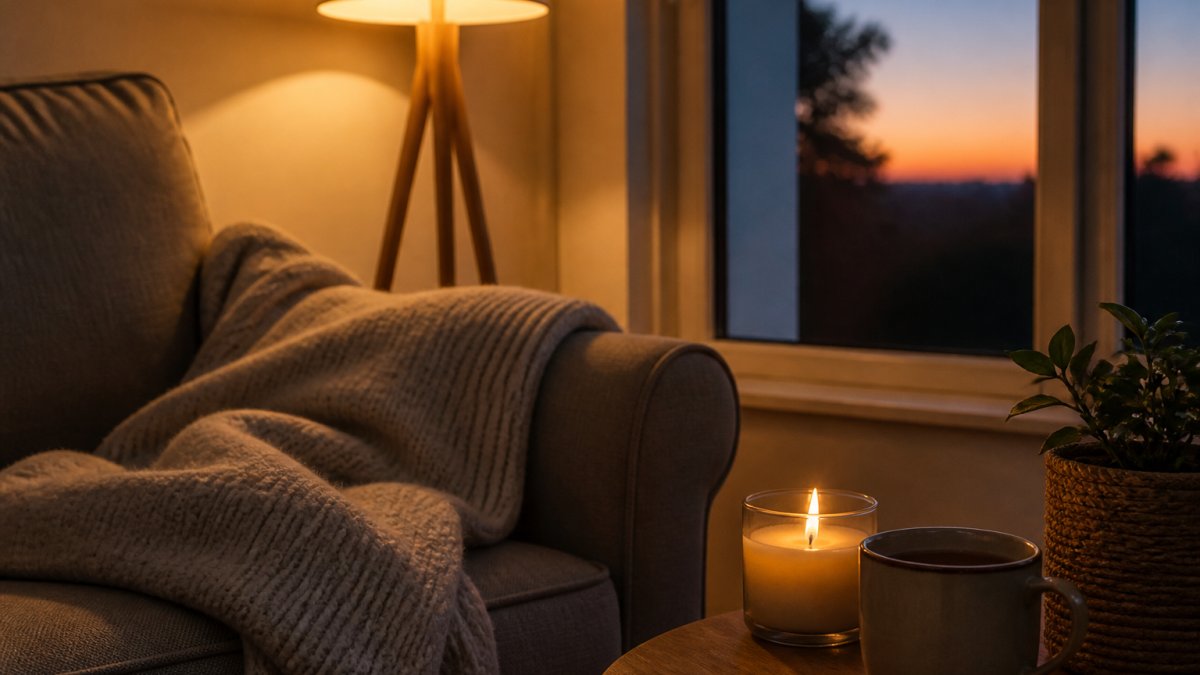
Relaxation products for home work best when you attach them to a fixed moment. A candle you light at 6pm every evening becomes a signal. A heated mask you use after lunch becomes a habit. Without a slot in your day, even good products gather dust.
Try mapping yours like this:
- Morning: nothing needed, keep it simple
- Mid-afternoon slump: a five-minute desk reset with a heat product
- After work: light a candle, dim the lights, close the laptop
- Before bed: a quiet wind-down with no screens
The pattern matters more than the product. Your brain learns to associate the cue with rest.
How to Judge Whether a Stress Relief Product Is Worth It
Give any new product a fair two-week trial, then score it honestly. Use this simple checklist:
- Did I use it at least four times in two weeks?
- Did it target the specific stress pattern I identified at the start?
- Did I feel better during or straight after using it?
- Was it easy to fit into my day, or did it feel like a chore?
- Would I buy it again with my own money?
Three or more ticks means it earns its place. Fewer than three, and it is time to let it go. This stops you building a drawer of forgotten gadgets.
One more thing worth knowing: quality and safety matter more than novelty. Look for clear instructions, sensible materials, and a retailer that stands behind what it sells. All Inspree orders ship with tracked and insured delivery and a secure, encrypted checkout, so if something arrives damaged or goes missing, you are covered.
Conclusion
Choosing well comes down to matching the product to your stress pattern, not to whatever looks most appealing on a shelf. Start with where and when your stress shows up, pick one item per moment, and give each a fair two-week trial. That approach turns a random collection of gadgets into a routine that actually helps.
At Inspree, we curate feel-good products with exactly this in mind, from the NeckRelief Pro™ cervical massage pillow (£35.00) for screen-time tension to the AuraGlow candle for your evening wind-down. Every item is chosen to solve a real, everyday problem, backed by tracked and insured delivery and a secure checkout. Browse the range and build a set that fits your day.
Frequently Asked Questions
How do I choose the right stress relief product?
Start with when and where your stress shows up. If it is tension headaches at your desk, a targeted item such as the Lumo Relief Heated Migraine Mask (£18.00) makes more sense than a general fidget toy. If it is restlessness in the evening, a candle or a warm wrap may suit you better. Match the product to the moment, set a realistic budget in GBP, and check the listing for clear instructions and safety guidance before buying.
Are stress relief toys effective?
Stress relief toys can help with brief, fidgety moments, such as during a long call or a tense commute. They give your hands something to do and can take the edge off restlessness. They are not a treatment for ongoing anxiety or low mood, and they work best as one small part of a wider routine. If stress is affecting your sleep, work or relationships, speak to your GP rather than relying on a toy alone.
What should I look for when buying a stress relief product?
Look for four things: a clear description of what the product does, honest instructions for use, safety information (especially for anything heated or worn on the body), and a returns policy. Check reviews for verified purchases rather than star ratings alone. For heated items, confirm the heat settings and whether it needs a USB power source. For sensory products for anxiety, check materials and whether they are easy to clean.
How can I tell whether a stress relief product is safe to use?
Read the supplied instructions before first use and follow the time limits given. Heated products such as the TummySoothe Heated Belt (£23.99) should be switched off and disconnected before sleep, and you should check your skin regularly while using them. Never use heat on numb or broken skin. If a product arrives damaged, stop using it and contact the retailer. For any product that makes medical-style claims, treat those claims with caution and seek advice from a GP or pharmacist.