

Easy Meal Prep Ideas for Weeknight Professionals
Table of Contents
- Why Easy Meal Prep Ideas Work for Busy Weeknights
- Breakfast Meal Prep: Get Your Week Started Right
- Lunch Meal Prep: Quick Ideas You Can Eat at Your Desk
- Batch Cooking Recipes for Beginners
- Healthy Meal Prep Containers: Choosing the Right Storage
- How to Store Meal Prep Food Safely Throughout the Week
- Common Meal Prep Mistakes to Avoid
- Frequently Asked Questions
Last Updated: September 20, 2026
Why Easy Meal Prep Ideas Work for Busy Weeknights
Meal prep transforms your week. Instead of scrambling for dinner each night, you spend a couple of hours on Sunday cooking. Then you eat well all week without stress.
For busy professionals, this is a game changer. You finish work exhausted. The last thing you want is to figure out what's for dinner. With easy meal prep ideas, your meals are already waiting in the fridge.
The real benefit isn't just convenience. When you plan ahead, you eat better. You're less likely to grab takeaway or skip meals. Your body gets consistent nutrition. Your energy stays stable.
At Inspree, we understand the demands on professionals juggling remote work, family, and self-care. Many find that having prepared meals reduces their daily stress. It's one less decision to make. One less thing pulling at your attention.
This guide covers practical easy meal prep ideas you can start this week. We'll walk through breakfast, lunch, and batch cooking recipes. You'll learn how to store food safely. And we'll cover the mistakes that derail most people.
Breakfast Meal Prep: Get Your Week Started Right
Breakfast sets your day's pace. A proper breakfast keeps you focused until lunch. But mornings are rushed.
Easy meal prep ideas for breakfast mean you grab and go. No thinking. No cooking.
Overnight oats are the simplest option. Mix oats, milk, yoghurt, and toppings in a jar the night before. Grab it in the morning. Eat it cold or heat it up. Takes 5 minutes to assemble five jars on Sunday.
Egg muffins work brilliantly too. Whisk eggs with vegetables and cheese. Pour into muffin tins. Bake for 20 minutes. You get 12 portions. Pop one in the microwave each morning. Ready in 90 seconds.
Breakfast burritos prep well. Scramble eggs, add beans, cheese, and salsa. Wrap in tortillas. Freeze them. Thaw overnight or microwave from frozen. Takes 2 minutes to heat.
Granola and yoghurt pots layer easily. Yoghurt on the bottom, granola on top (add this fresh on the morning to keep it crunchy), berries scattered through. Assemble five on Sunday. Grab one each morning.
The key: choose one or two breakfasts. Don't try to prep five different options. Repetition saves time.
Prep time for breakfast: 30-45 minutes on Sunday. Serves one person for 5-7 days.
Lunch Meal Prep: Quick Ideas You Can Eat at Your Desk
Lunch is where easy meal prep ideas shine most. You're at work. You can't cook. You need something filling that doesn't spoil.
Grain bowls are your foundation. Cook rice, quinoa, or couscous on Sunday. Add roasted vegetables, a protein, and a sauce. Assemble into containers. You've got five lunches ready.
Example bowl:
- Brown rice (cooked)
- Roasted broccoli and sweet potato
- Grilled chicken breast
- Tahini dressing
This stays fresh for 4-5 days. Tastes the same on Wednesday as Monday.
Pasta salads work if you use the right dressing. Toss cooked pasta with vegetables, protein, and olive oil-based dressing (not creamy). Creamy dressings make pasta soggy. Oil-based dressings keep it firm.
Soup and bread combos are underrated. Make a big batch of soup on Sunday. Portion it into containers. Pair with crusty bread. Reheat at work. Filling, warm, satisfying.
Salad jars keep greens fresh for days. Layer like this from bottom to top: dressing, hard vegetables (carrots, peppers), softer vegetables (tomatoes), protein, greens. When you eat it, shake the jar. Everything mixes with the dressing.
Leftovers from dinner work too. Cook extra on Monday night. Wednesday lunch is sorted. This is the easiest meal prep idea, you're not cooking extra, just cooking more.
Prep time for lunch: 45-60 minutes. Serves one person for 5 lunches.
Batch Cooking Recipes for Beginners
Batch cooking is meal prep's foundation. Cook once. Eat multiple times.
Chilli is the beginner's batch cooking recipe. Brown mince. Add onions, garlic, tinned tomatoes, beans, and spices. Simmer for 30 minutes. You've got six portions. Freeze half. Eat the other half this week.
Bolognese works the same way. Brown mince with onions and garlic. Add tinned tomatoes and tomato purée. Simmer for 45 minutes. Serve with pasta, rice, or courgette noodles.
Roasted vegetables are foolproof. Chop vegetables (broccoli, peppers, sweet potato, carrots). Toss with olive oil and salt. Roast at 200°C for 30-40 minutes. They keep for 5 days. Use them in bowls, wraps, or alongside proteins.
Grilled chicken breasts prep easily. Season with salt, pepper, garlic powder. Grill or pan-fry for 6-8 minutes each side. Cool and portion. Use in salads, wraps, bowls, or eat with vegetables.
Lentil curry feeds a crowd. Sauté onions and garlic. Add curry paste. Add lentils, coconut milk, and vegetables. Simmer for 25 minutes. Freeze beautifully. Tastes better the next day.
The rule: choose recipes with 5-7 ingredients. Complex recipes fail. You forget steps. You lose motivation.
Batch cooking time: 60-90 minutes. Yields 6-8 portions per recipe.
Healthy Meal Prep Containers: Choosing the Right Storage
Your containers matter more than you think. Bad containers ruin good food.
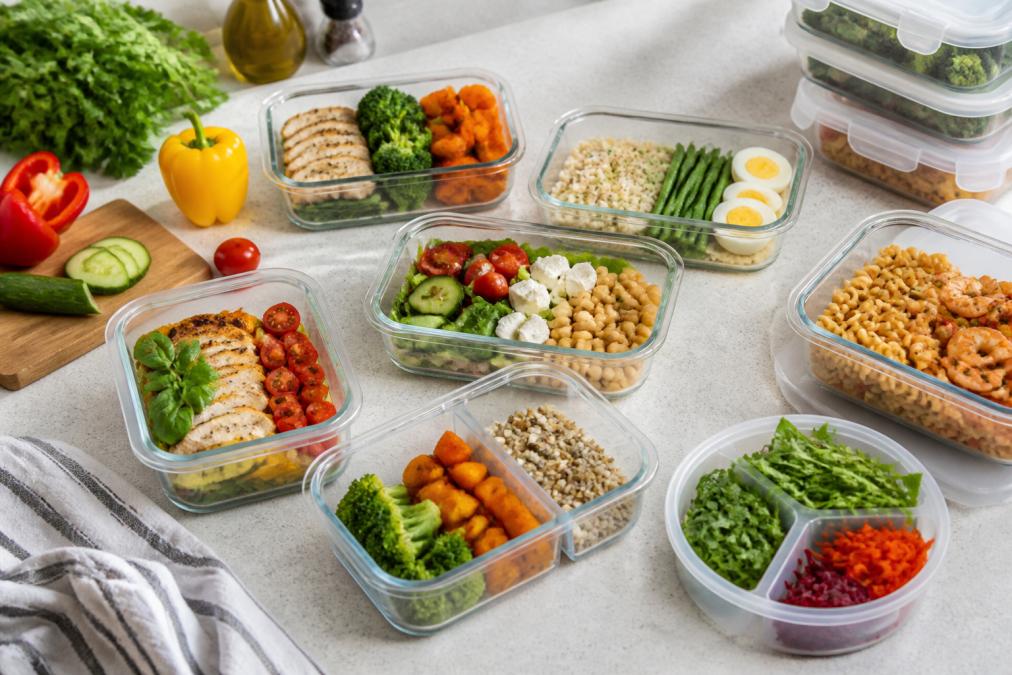
Glass containers are best. They don't absorb odours. They don't leach chemicals. They last years. They're microwave-safe and dishwasher-safe. The downside: they're heavier to carry to work.
Plastic containers are convenient. They're light. They're cheap. But cheap plastic can leach chemicals into food, especially when heated. Buy food-grade plastic. Look for containers marked BPA-free. They cost a bit more but last longer.
Silicone containers are trendy. They're flexible, which makes them easy to store. They're durable. Some are microwave-safe, some aren't. Check before buying.
Size matters. A 1-litre container is too big for most meals. A 750ml container is ideal. It holds a proper portion without wasting space.
Compartments or no compartments? Compartments keep foods separate. This matters if you don't want your salad dressing soaking your greens. For curries and chillies, compartments don't matter, everything mixes anyway.
Lids must seal properly. Loose lids let food dry out. They cause spills in your bag. Invest in containers with tight-fitting lids.
The right tools can make the habit sustainable.
Quality containers can last for years with proper care.
How to Store Meal Prep Food Safely Throughout the Week
Food safety isn't boring, it's essential. Bad storage causes food poisoning.
Fridge storage rules: Cooked food lasts 3-4 days in the fridge. Not 5, not 6. Three to four days. After that, bacteria multiply. When in doubt, throw it out.
Temperature matters. Your fridge should be 4°C or below. Use a fridge thermometer to check. Many fridges run warmer than people think.
Cool food before storing. Hot food raises your fridge's temperature. Let it cool to room temperature first. Then refrigerate.
Freezer storage: Most batch-cooked meals freeze for 2-3 months. Soups, curries, chillies, and bolognese freeze brilliantly. Rice and pasta freeze okay but get mushy when thawed. Salads don't freeze.
Label everything. Write the date on the container. You'll forget what day you made it. A permanent marker takes 10 seconds.
Thaw safely. Move food from freezer to fridge the night before. Thaw in the fridge, not on the counter. Counter thawing lets bacteria grow.
Reheating: Reheat to 75°C (Cooking your food). Use a microwave or hob. Stir halfway through to ensure even heating.
Raw ingredients: Raw vegetables last 5-7 days. Raw meat lasts 2-3 days. Store meat on the bottom shelf so it doesn't drip on other foods.
These rules sound strict, but they're simple. Follow them and you'll never have a problem.
Common Meal Prep Mistakes to Avoid
Most people fail at meal prep not because the idea is bad, but because they make predictable mistakes.
Mistake 1: Prepping too much variety. You decide to make five different lunches. You get bored by Wednesday. You stop eating them. Stick to two lunches maximum. Repetition is fine.
Mistake 2: Choosing recipes that don't reheat well. Fried food gets soggy. Salads get soggy. Pasta gets mushy. Choose recipes that taste the same or better after reheating.
Mistake 3: Not seasoning properly. Bland food sits in your fridge untouched. Season generously. You can always add salt, but you can't remove it.
Mistake 4: Prepping on the wrong day. Sunday evening is ideal. You prep when you're calm. You eat the freshest meals early in the week. Friday prep means your food is 5 days old by Wednesday.
Mistake 5: Skipping the containers step. You cook everything but don't portion it. Then you eat too much, or you get lazy and order takeaway. Portion immediately after cooking.
Mistake 6: Forgetting about freezer space. You batch cook four recipes. Your freezer is full. You can't fit anything else. Plan what you'll freeze before you cook.
Mistake 7: Not tasting as you go. You cook a big batch of curry. It's bland.
Avoid these seven and your meal prep succeeds.
Your week starts Sunday. Your meals start then too.
Frequently Asked Questions
How do I start meal prepping if I work full-time?
Begin with just one meal, either breakfast or dinner, rather than prepping everything at once. Set aside 90 minutes on Sunday to prepare 3-4 portions of a simple dish like a stir-fry or curry. Use easy meal prep ideas that require minimal chopping: roasted vegetables, grains, and a protein source. Once this feels manageable, add a second meal. Most busy professionals find that starting small prevents overwhelm and builds the habit.
How long can you keep prepped meals in the fridge safely?
Most cooked meals stay safe for 3-4 days when stored in airtight containers at 4°C or below. Raw prepared ingredients like chopped vegetables last 2-3 days. Freezing extends this significantly, most batch-cooked dishes keep for up to 3 months. Always check that food has cooled to room temperature before refrigerating, and label containers with the date prepared so you know when to use them.
What are the best containers for meal prepping?
Healthy meal prep containers should be airtight, freezer-safe, and microwave-safe for convenience. Glass containers with secure lids are durable and don't retain stains or odours. Compartmentalised containers keep different foods separate so sauces don't make grains soggy. Investing in high-quality containers can mean they'll last longer and perform better. Reusable containers also reduce waste compared to single-use options.
Can you meal prep healthy dinners in under an hour?
Yes. Focus on batch cooking recipes for beginners that use one pan or pot: baking tray roasted vegetables with protein, slow cooker chilli, or a large pot of soup. Prepare ingredients in advance (wash, chop, measure) to save time. Choose recipes with 5-7 simple ingredients rather than complex dishes. With practice and organisation, you can prepare 4-5 portions of a nutritious dinner in 45-60 minutes.