

Benefits of Daily Relaxation for Mental Health
Table of Contents
- How Daily Relaxation Improves Mental Health
- Daily Relaxation Techniques You Can Start Today
- Mindfulness Exercises for Stress Relief
- How Long to Meditate Each Day for Best Results
- Relaxation Exercises for Anxiety Management
- Building a Relaxation Routine You'll Actually Stick With
- Creating Your Relaxation Space at Home
- Frequently Asked Questions
Last Updated: 10 October 2026
How Daily Relaxation Improves Mental Health
When you're juggling work, family, and a thousand daily tasks, your mind rarely gets a break, yet the benefits of daily relaxation for mental health in the UK are backed by what many people experience. The benefits of daily relaxation for mental health in the UK are backed by what many people experience: a genuine shift in how you feel, think, and cope with stress.
Daily relaxation isn't just about feeling calm for a few minutes. It's about training your nervous system to recover from stress more effectively. When you practise relaxation regularly, your body learns to switch out of "fight or flight" mode and into a state where healing and rest become possible.
Many professionals find that consistent relaxation practices reduce anxiety, improve sleep quality, and help them think more clearly. The benefits of daily relaxation for mental health come from giving your mind permission to pause, something most of us rarely do naturally.
At Inspree, we offer tools and practices to help people build relaxation into their routines. Whether it's creating a calm space or choosing products that support your well-being, the foundation is always the same: regular, intentional time to slow down.
Daily Relaxation Techniques You Can Start Today
The best relaxation technique is the one you'll actually use. Here are practical approaches that work for different situations and preferences.
Breathing exercises are the quickest way to calm your nervous system. Try the 4-7-8 technique: breathe in for four counts, hold for seven, exhale for eight. This single practice signals to your body that you're safe. You can do it anywhere, at your desk, on the train, or before bed.
Progressive muscle relaxation works by tensing and releasing different muscle groups. Start with your toes, tighten them for five seconds, then release. Move up through your calves, thighs, stomach, chest, arms, and face. This technique helps you notice where you hold tension and teaches your body what true relaxation feels like.
Guided imagery means visualising a calm place in detail. Close your eyes and imagine a beach, forest, or any space that feels peaceful to you. Notice the colours, sounds, and textures. Your brain responds to vivid imagery almost as strongly as it responds to the real thing.
Gentle movement like stretching or slow walking counts as relaxation. You don't need yoga experience, simply moving your body slowly and deliberately reduces stress hormones. Many people find that benefits of daily relaxation for mental health increase when they combine movement with mindfulness.
The key is choosing techniques that fit your life. If you hate sitting still, guided movement works better than meditation. If you're always rushed, breathing exercises fit into any schedule.
Mindfulness Exercises for Stress Relief
Mindfulness means paying full attention to the present moment without judgment. It's the opposite of what most of us do: thinking about yesterday's mistakes or tomorrow's deadlines.
A basic mindfulness exercise takes just five minutes. Sit comfortably and focus on your breath. Notice the cool air entering your nose and the warm air leaving. When your mind wanders, and it will, gently bring it back to your breath. That's it. You're not trying to empty your mind or achieve a special state. You're just noticing what's happening right now.
Body scan meditation is another straightforward mindfulness practice. Lie down or sit, then slowly bring your attention to different parts of your body from head to toe. Notice sensations without trying to change them. This practice anchors you firmly in the present moment and releases physical tension.
Mindful eating works well for people who struggle with traditional meditation. Choose one meal or snack and eat it slowly, noticing every flavour, texture, and smell. This simple practice reduces stress and often improves digestion.
Research shows that mindfulness exercises for stress relief work best when practised daily. Even ten minutes changes how your brain processes stress over time. The benefits of daily relaxation for mental health through mindfulness compound, you'll notice differences after a few weeks of consistent practice.
Many people pair mindfulness with calming products. The AuraGlow™ Crystal Healing Candle creates an atmosphere that supports calm, making it easier to settle into a mindfulness practice.

How Long to Meditate Each Day for Best Results
The ideal meditation duration depends on your experience and lifestyle. Beginners often ask this question because they worry they're not doing it "right" if they only have five minutes.
Start with five to ten minutes daily. This is enough time to calm your nervous system and notice real benefits. Consistency matters far more than duration, ten minutes every day beats an hour once a week.
As your practice deepens, many people find that fifteen to twenty minutes becomes natural. Some experienced practitioners meditate for thirty minutes or longer. But here's what matters: how long to meditate each day should match what you'll actually do.
Daily practice guidelines:
- Beginners: 5-10 minutes daily
- Intermediate: 15-20 minutes daily
- Advanced: 20-30+ minutes as desired
- Minimum for benefits: 5 minutes consistently
The benefits of daily relaxation for mental health increase as your practice becomes regular. Your brain needs repetition to rewire its stress response. Missing days sets you back slightly, so aim for consistency over ambition.
Morning meditation often works best because your mind is clearer and fewer distractions compete for your attention. However, evening meditation helps with sleep. Choose a time you'll protect and stick to it.
Relaxation Exercises for Anxiety Management
Anxiety thrives when your body stays in a stressed state. Relaxation exercises for anxiety work by interrupting that cycle and teaching your nervous system a different pattern.
The 5-4-3-2-1 grounding technique works quickly for acute anxiety. Name five things you can see, four you can touch, three you can hear, two you can smell, and one you can taste. This exercise pulls your attention out of anxious thoughts and into the present moment where you're actually safe.
AuraGlow™ Crystal Healing Candle →
Box breathing is another rapid-response tool. Breathe in for four counts, hold for four, exhale for four, hold for four. Repeat five to ten times. This pattern naturally calms your nervous system and can be done discreetly anywhere.
Tense and release works for physical anxiety symptoms. When anxiety creates muscle tension, deliberately tightening then releasing muscles helps. Clench your fists for five seconds, then release. Move through your whole body. This teaches your nervous system the difference between tension and relaxation.
The benefits of daily relaxation for mental health specifically include reduced anxiety when you practise these exercises regularly. Your body learns to recognise and interrupt the anxiety response before it escalates.
Creating a calm environment supports anxiety management. Many people find that the Mulberry Silk Light Blocking Sleep Eyemask helps with anxiety-related sleep disruption, whilst the SootheStep™ Heated Foot Cushion provides grounding comfort during anxious moments.

Building a Relaxation Routine You'll Actually Stick With
The difference between knowing relaxation helps and actually benefiting comes down to routine. A routine removes the daily decision of whether to relax, you just do it.
Start by choosing one time of day. Morning works for some people because it sets a calm tone before stress begins. Evening works for others because it helps them release the day's tension. Pick whichever time you're most likely to protect.
Next, choose your relaxation practice. Don't try to do everything at once. Pick one technique, breathing, stretching, or meditation, and commit to it for two weeks. Once it feels natural, you can add others.
Make your relaxation space inviting. This doesn't require expensive changes. Dim the lights, close the door, and remove your phone. A comfortable cushion or chair matters. Some people light a candle or play quiet music.
Track your practice for the first month. Simply noting "done" on a calendar creates accountability and shows you the pattern. Most people notice benefits of daily relaxation for mental health within three to four weeks of consistent practice.
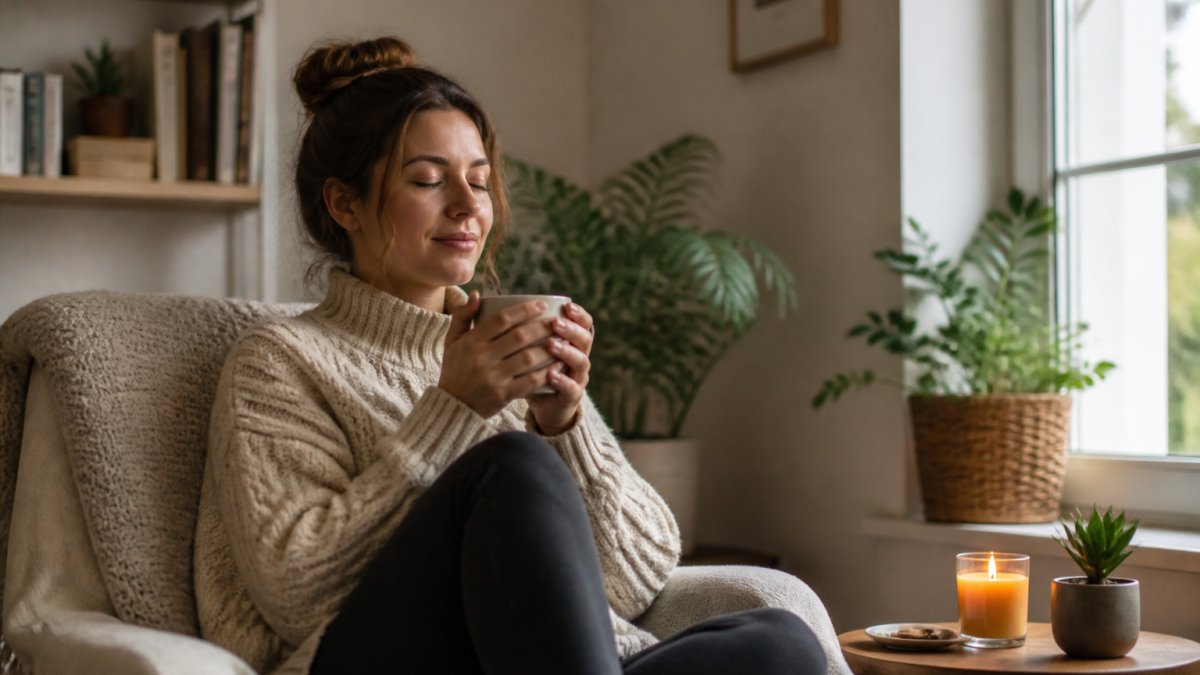
Common obstacles include forgetting, feeling like you don't have time, or losing motivation. Set a phone reminder for your chosen time. Even three minutes counts, consistency beats perfection. When motivation dips, remember that relaxation is maintenance, not luxury. You wouldn't skip brushing your teeth because you're busy, and your mental health deserves the same priority.
Creating Your Relaxation Space at Home
Your physical environment shapes your ability to relax. A dedicated relaxation space signals to your brain that calm is coming, which helps your nervous system prepare.
You don't need a separate room. A corner of your bedroom, a spot on the sofa, or even a chair by a window works. The key is consistency, use the same space each time so your brain associates it with relaxation.
Elements that support relaxation:
- Soft, comfortable seating
- Dim or warm lighting
- Minimal visual clutter
- Quiet or gentle background sounds
- Temperature that feels comfortable
- Optional: candles, plants, or calming scents
Lighting matters significantly. Harsh overhead lights keep your nervous system alert. Soft, warm light signals safety and rest. Many people find that adjustable lighting transforms their space. Natural light during the day helps, but dimmer options for evening are essential.
Temperature affects relaxation too. Most people relax better when slightly warm. The WoolWarmth™ Premium Cosy Socks and SootheStep™ Heated Foot Cushion create physical comfort that supports mental relaxation.

Sound matters as well. Complete silence works for some people, whilst others prefer gentle background sound, rain, ocean waves, or soft music. Experiment to find what helps your mind settle.
The AuraGlow™ Crystal Healing Candle serves multiple purposes: soft lighting, calming scent, and a focal point for your attention. These elements together create an atmosphere where the benefits of daily relaxation for mental health become easier to access.
Remove distractions ruthlessly. Your phone should be out of sight. Close the door if possible. Tell others in your household you need fifteen minutes undisturbed. These boundaries protect your practice and signal its importance.
The benefits of daily relaxation for mental health are real and measurable: reduced anxiety, better sleep, improved focus, and greater emotional resilience. The practices work, but only if you actually do them.
At Inspree, we believe that small changes in your environment and routine create meaningful shifts in how you feel.
Frequently Asked Questions
What are the mental health benefits of daily relaxation?
Daily relaxation reduces cortisol levels, the stress hormone that affects mood and anxiety. Regular practice improves emotional regulation, helping you respond to challenges with greater calm. Over time, consistent relaxation strengthens your ability to manage difficult emotions, builds resilience, and creates a more stable baseline for mental wellbeing. Many people report better sleep quality, improved focus, and reduced racing thoughts after establishing a daily relaxation habit.
How long should I relax each day to see mental health benefits?
Even 5-10 minutes of daily relaxation can produce measurable benefits, though 15-20 minutes is often more effective for anxiety and stress reduction. The key is consistency rather than duration. Starting with just 5 minutes daily is better than attempting 30 minutes sporadically, as your nervous system responds to regular practice. Many people find that a short morning or evening routine becomes sustainable and compounds benefits over weeks.
Can mindfulness exercises really help with anxiety and stress?
Yes. Mindfulness exercises interrupt the stress response by anchoring your attention to the present moment, breaking cycles of worry and rumination. Techniques like focused breathing and body scans activate your parasympathetic nervous system, the part that promotes calm. Research consistently shows mindfulness reduces anxiety symptoms and helps people develop distance from anxious thoughts rather than being overwhelmed by them.
What's the difference between relaxation and mindfulness?
Relaxation aims to reduce physical and mental tension through activities like breathing or progressive muscle relaxation. Mindfulness focuses on non-judgmental awareness of your thoughts and sensations in the present moment. You can relax without being mindful, and you can practise mindfulness while still experiencing some tension. Many people combine both: mindfulness to observe stress, and relaxation techniques to release it.