

Aromatherapy Diffusers for Stress Relief: A 2026 Guide
Table of Contents
- How Aromatherapy Diffusers Help with Stress and Anxiety
- Best Essential Oils for Stress Relief
- How to Use an Aromatherapy Diffuser Safely
- How Long to Run a Diffuser for Anxiety Relief
- Creating Your Stress-Relief Space with Diffusers
- Common Mistakes That Reduce Diffuser Effectiveness
- Frequently Asked Questions
Last Updated: October 1, 2026
How Aromatherapy Diffusers Help with Stress and Anxiety
Aromatherapy diffusers and stress-relief devices disperse essential oils into the air, allowing you to inhale therapeutic scents that can help reduce stress and anxiety. These compact tools work by breaking down essential oils into fine mist particles, which you then breathe in throughout your day. The practice of using scent to support emotional wellbeing has been part of wellness routines for centuries, and modern diffusers make it convenient to access these benefits at home or in your workspace.
When you inhale essential oil vapours, the aromatic compounds travel through your nasal passages to the olfactory bulb, the part of your brain connected to emotion and memory. This direct pathway means scent can influence your nervous system quickly. Many people find that a few minutes with their diffuser during a stressful moment helps them feel calmer and more grounded.
The beauty of aromatherapy diffusers for stress relief is their simplicity. Unlike practices that require special equipment or training, you simply add water and a few drops of essential oil, switch on your diffuser, and let it work. No complicated setup, no mess. For busy professionals juggling multiple demands, this accessibility makes stress management feel less like another chore and more like a small moment of self-care you can actually maintain.
Best Essential Oils for Stress Relief
Choosing the right essential oils makes a real difference in how effective your aromatherapy diffusers for stress relief practice becomes. Lavender is the most researched option for calming, it's gentle, widely available, and works for most people without overwhelming the senses. Chamomile offers similar soothing properties with a slightly warmer, earthier tone. If you find lavender too familiar or subtle, bergamot adds a citrus brightness that lifts mood whilst still supporting relaxation.
For anxiety specifically, frankincense and sandalwood are worth exploring. Frankincense has a grounding quality that many find centring during moments of worry. Sandalwood works similarly but with a softer, more meditative feel. Ylang ylang is another option, it's floral and slightly sweet, useful when you want something that feels more luxurious than medicinal.
A practical approach is to start with one oil and use it consistently for at least a week before switching. This lets you notice subtle shifts in how you feel and whether that particular scent genuinely helps you. Some people respond better to floral oils, others to woodsy or citrus notes. Your preference matters as much as the oil's properties, if you dislike the smell, you won't use the diffuser, so effectiveness becomes irrelevant.
How to Use an Aromatherapy Diffuser Safely
Using an aromatherapy diffuser safely means understanding a few basic rules that protect both you and your diffuser. Start by always diluting essential oils in water, never run pure oil directly through the device. Most diffusers specify the water-to-oil ratio in their instructions, but a common guideline is 3-5 drops of essential oil per 100ml of water. This concentration is enough to fill your space with scent without overwhelming your senses or irritating your respiratory system.
Check your water regularly. Stale water sitting in the diffuser tank can develop mould or bacteria, which defeats the purpose of creating a healthy space. Empty and refill your diffuser every 1-2 days, and clean the tank weekly with a soft cloth. If your diffuser has a filter, follow the manufacturer's guidance on replacement, most need changing every 1-3 months depending on use.
Placement matters for safety too. Keep your diffuser on a stable, flat surface away from the edge of desks or shelves where it could be knocked over. Avoid placing it directly beside electronics, as the moisture can damage them. If you have pets or small children, position your diffuser somewhere they can't access it, some essential oils aren't suitable for animals, and children shouldn't drink or play with the water.
Never run your diffuser continuously for hours. Most benefit comes from 30-60 minute sessions with breaks in between. This approach is gentler on your respiratory system and uses your essential oils more efficiently. If you're new to diffusers, start with shorter sessions to see how your body responds.
How Long to Run a Diffuser for Anxiety Relief
The ideal duration for running your aromatherapy diffuser depends on your space size and personal sensitivity. For a small bedroom or home office, 30-45 minutes is usually enough to fill the air with scent and create a calming atmosphere. Larger rooms may need 45-60 minutes. Once the scent is established, you can turn the diffuser off and enjoy the lingering aroma for another 30 minutes or so.
If you're using your diffuser for anxiety relief specifically, shorter, intentional sessions often work better than all-day running. Set a timer for 20-30 minutes during your most stressful part of the day, perhaps first thing in the morning or during your afternoon slump. This concentrated approach gives you a focused moment of calm rather than background scent you stop noticing. Many people find that the ritual of sitting near the diffuser for a few minutes matters as much as the scent itself.
Don't feel pressured to run your diffuser constantly. Your nose adapts to continuous scent exposure, meaning you'll stop noticing it after a while, a phenomenon called olfactory adaptation (Olfactory adaptation: recordings from the human olfactory epithelium). By using your diffuser in focused sessions, you maintain its effectiveness and avoid that diminishing-returns feeling. Evening sessions of 20-30 minutes work well if you're trying to wind down before bed.
AuraGlow™ Crystal Healing Candle →
Creating Your Stress-Relief Space with Diffusers
Your physical environment shapes how you feel, and adding an aromatherapy diffuser is just one piece of a calming space. Start by choosing a location where you spend focused time, your desk if you work from home, a corner of your bedroom, or a quiet spot in your lounge where you can sit without interruption. This becomes your designated stress-relief zone.
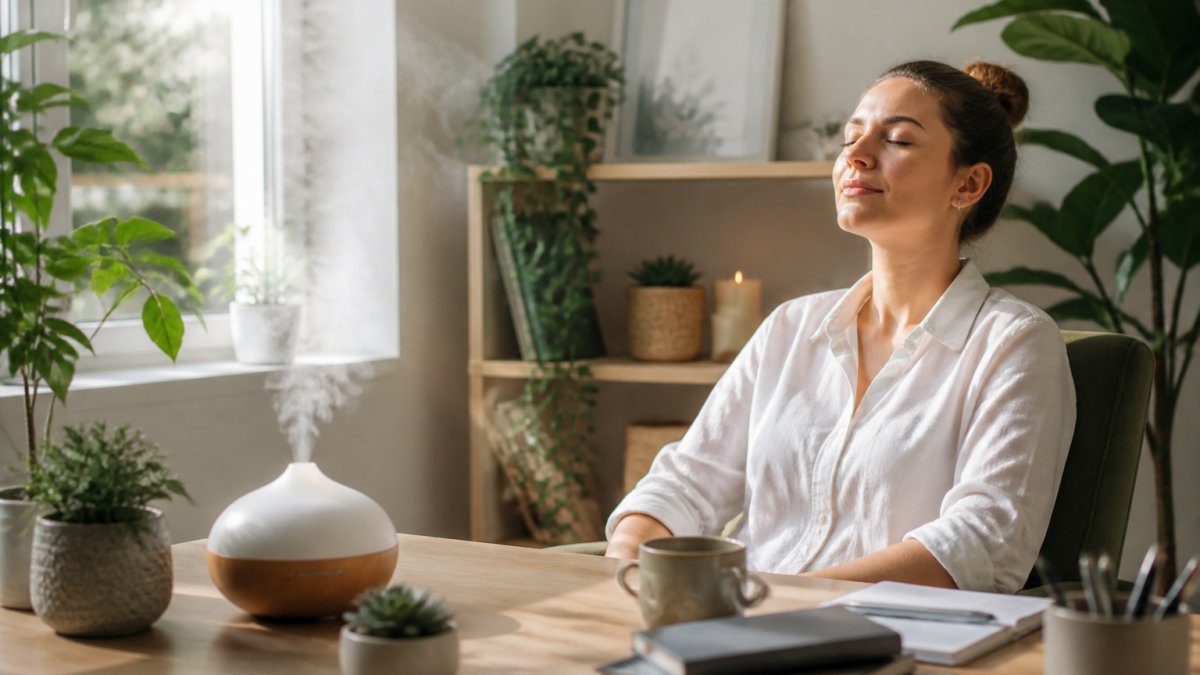
Pair your diffuser with other sensory elements that support calm. Soft lighting, think warm lamps rather than harsh overhead lights, makes a real difference. Plants add life to the space and naturally improve air quality. A comfortable chair or cushion invites you to actually sit and spend time there rather than rushing past. If possible, keep this space free from work clutter or screens that trigger stress.
The AuraGlow™ Crystal Healing Candle from Inspree (£14.99) complements a diffuser beautifully if you want to add another sensory layer. Candles create warmth and visual calm, and when combined with your diffuser's scent, they create a more immersive experience. You don't need expensive additions, even a simple blanket and a book you enjoy reading can transform a corner into somewhere you actually want to spend time.

Consistency matters more than perfection. Use your stress-relief space regularly, ideally at the same time each day. Your brain will start to associate that location and routine with calm, making it easier to shift into a relaxed state when you're there. Over time, simply sitting in that space, even before turning on your diffuser, can trigger a sense of peace.
Common Mistakes That Reduce Diffuser Effectiveness
The most common mistake is using too much essential oil. People assume more oil means stronger benefits, but excess oil can actually irritate your respiratory system and create an unpleasant, overwhelming smell that makes you want to avoid your diffuser. Stick to the recommended drops per water volume, and resist the urge to add "just a bit more."
Another frequent error is inconsistent use. You buy a diffuser with genuine enthusiasm, use it daily for two weeks, then life gets busy and it sits unused for months. When you finally turn it back on, you've forgotten how to use it properly or the essential oil has degraded. Effectiveness comes from regular, sustained use. Even just 20-30 minutes most days beats sporadic marathon sessions.
Neglecting maintenance is surprisingly common. Water left sitting in the tank becomes a breeding ground for bacteria and mould. You end up diffusing contaminated water instead of pure therapeutic scent, which defeats the purpose entirely. Empty and refill your diffuser regularly, it takes 60 seconds and makes a massive difference.
Choosing low-quality essential oils or using fragrance oils instead of pure essential oils is another pitfall.
Frequently Asked Questions
Do aromatherapy diffusers actually help with stress?
Yes. Aromatherapy diffusers disperse essential oil molecules into the air, which your body absorbs through inhalation. This activates your olfactory system and can trigger relaxation responses. Many users report reduced tension and improved mood within minutes of use. The effect varies by individual and depends on which essential oils you choose and how consistently you use your diffuser.
Which essential oils are best for anxiety and stress?
Lavender is widely recognised for its calming properties and is often the first choice for stress relief. Chamomile promotes relaxation and can ease racing thoughts. Bergamot lifts mood and reduces tension, whilst frankincense encourages deep breathing and grounding. Ylang ylang and sandalwood are also effective for anxiety. Start with one oil to see how your body responds, then experiment with blends to find what works best for you.
How long should you run an aromatherapy diffuser for anxiety?
Run your diffuser for 15-30 minutes at a time, two to three times daily for anxiety relief. This duration is long enough to fill a room with scent without overwhelming your senses or wasting essential oils. Some people prefer shorter 10-minute sessions, whilst others use diffusers for an hour during work. Avoid running diffusers continuously throughout the day, as your nose becomes desensitised to the scent and you may need stronger doses to feel the same effect.
Are there safety considerations for using diffusers at home?
Yes. Always dilute essential oils with water according to your diffuser's instructions, never use pure oil. Keep diffusers away from children and pets, as some oils can be harmful if ingested. Ensure your room is well-ventilated to prevent oil buildup. If you have asthma, consult your GP before using diffusers, as certain oils may trigger symptoms. Never apply essential oils directly to skin without proper dilution, and avoid diffusing during pregnancy without medical advice.