

Sustainable Kitchen Gadgets for Healthy Cooking
Table of Contents
- Why Sustainable Kitchen Gadgets Matter for Your Health
- Non-Toxic Cookware Brands That Prioritise Safety
- Energy-Efficient Kitchen Appliances That Save Money
- Plastic-Free Kitchen Essentials for Daily Cooking
- Sustainable Kitchen Gadgets That Simplify Meal Prep
- Making the Switch: Common Mistakes to Avoid
- Building Your Sustainable Kitchen on a Budget
- Frequently Asked Questions
Last Updated: September 19, 2026
Why Sustainable Kitchen Gadgets Matter for Your Health
Sustainable kitchen gadgets are tools and appliances designed with environmental responsibility in mind, often crafted from non-toxic materials like bamboo, stainless steel, or recycled materials. They combine eco-friendly manufacturing with practical functionality, making them ideal for households committed to reducing waste whilst maintaining nutritious cooking habits.
The connection between your kitchen tools and your wellbeing runs deeper than you might think. When you cook with non-toxic cookware and use plastic-free gadgets, you're not just reducing your environmental footprint, you're also protecting your family from harmful chemicals that can leach into food during preparation and cooking.
At Inspree, we've curated a collection of kitchen essentials that prove sustainability doesn't mean sacrificing quality or convenience. Busy households often worry that eco-friendly options cost more or work less effectively. The reality is different: the right sustainable kitchen gadgets simplify meal prep and genuinely improve how you feel about your daily routines.
Non-Toxic Cookware Brands That Prioritise Safety
Non-toxic cookware eliminates synthetic coatings and heavy metals, using materials like ceramic, cast iron, or stainless steel that won't degrade into your food. This matters because conventional non-stick cookware can release harmful compounds when heated above certain temperatures, particularly during the seasoning process or when scratched.
Several established brands have built their reputation on this commitment. GreenPan specialises in ceramic non-stick surfaces without PFOA or PTFE, whilst Our Place makes cast iron cookware that doubles as both functional kitchen tool and table centrepiece. Le Creuset offers enamelled cast iron that requires no seasoning and eliminates the worry of synthetic coatings altogether.
What separates genuinely safe cookware from marketing speak is transparency about materials and manufacturing. Look for brands that openly disclose their coating composition and provide clear guidance on safe temperature ranges. Many people assume all ceramic non-stick performs identically, it doesn't. Quality matters significantly in how long the coating lasts and whether it remains non-toxic after years of use.
The investment in non-toxic cookware typically pays for itself through longevity. A proper cast iron pan or ceramic-coated pot lasts decades, whilst conventional non-stick cookware often requires replacement every few years as coatings degrade.
Energy-Efficient Kitchen Appliances That Save Money
Energy-efficient kitchen appliances reduce electricity consumption without compromising performance, using advanced motors, better insulation, and smarter heating systems. An energy-efficient kettle, for example, heats water faster and uses less electricity than older models, whilst an efficient slow cooker maintains temperature with minimal energy waste.
Look for appliances with clear energy ratings, the UK energy label system shows efficiency from A (most efficient) to G (least efficient) (Regulations: energy information). A-rated kettles and toasters genuinely use less power per use, and those savings compound across months and years. Many households don't realise that small appliances running constantly throughout the day represent a surprisingly large portion of annual energy bills.
Induction hobs deserve particular mention because they transfer heat directly to cookware with minimal energy loss, compared to traditional electric or gas hobs that waste significant heat into the surrounding air. The upfront cost is higher, but energy savings and faster cooking times make them practical for busy professionals.
Plastic-Free Kitchen Essentials for Daily Cooking
Plastic-free kitchen essentials replace single-use plastics and plastic storage containers with alternatives like glass, stainless steel, bamboo, or wood. This shift eliminates microplastics from your food storage and reduces the plastic waste entering landfills and oceans.
Glass food containers with stainless steel lids are the foundation of a plastic-free kitchen. They withstand repeated heating and cooling without degrading, don't absorb odours or stains like plastic does, and last indefinitely. Bamboo chopping boards replace plastic cutting mats, whilst wooden utensils and stainless steel measuring cups eliminate plastic kitchen tools entirely.
Beeswax food wraps have become popular alternatives to cling film, they're washable, reusable for months, and compostable at the end of their life. Bamboo steamer baskets replace plastic microwave steamers, and stainless steel straws eliminate the need for disposable plastic alternatives.
The practical advantage here is durability. Plastic storage containers crack, warp, and eventually crack further until they're unusable. Glass and stainless steel containers maintain their integrity through hundreds of uses, making them genuinely more economical despite higher initial cost.
Sustainable Kitchen Gadgets That Simplify Meal Prep
Sustainable kitchen gadgets designed for meal preparation combine smart engineering with durable, non-toxic materials. A quality vegetable spiraliser made from bamboo and stainless steel creates noodles from courgettes and carrots in seconds, encouraging healthier eating without the plastic waste of disposable alternatives.
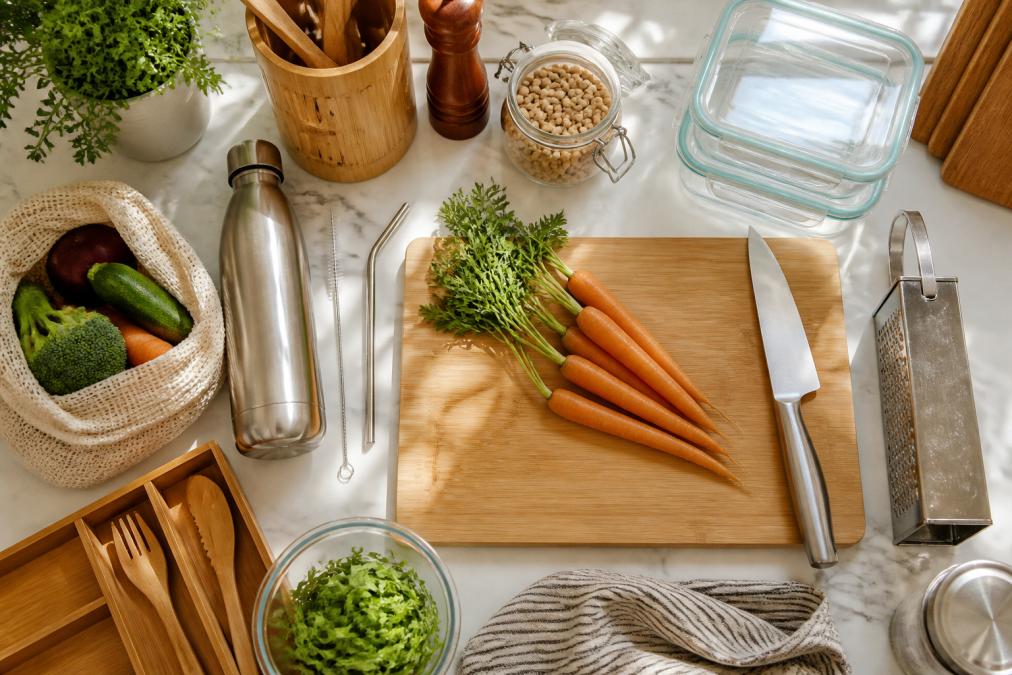
Mandoline slicers with stainless steel blades and wooden bases slice vegetables uniformly for consistent cooking and presentation. Mortar and pestles made from stone or ceramic grind spices and herbs more effectively than electric grinders, whilst adding a tactile, intentional element to cooking. Bamboo steamer baskets stack for cooking multiple ingredients simultaneously, reducing energy use and cooking time.
When your tools feel good to use and you know they're safe for your family, cooking becomes something to anticipate rather than rush through.
Making the Switch: Common Mistakes to Avoid
The most common mistake is replacing your entire kitchen at once. This approach exhausts your budget, creates decision fatigue, and often results in buying items you don't actually use. Instead, replace one item at a time as your existing tools wear out or break.
Another frequent error is choosing aesthetically pleasing sustainable kitchen gadgets over functional ones. A beautiful bamboo utensil set that doesn't balance properly or feels awkward in your hand will sit unused in a drawer. Functionality comes first, aesthetics matter for items you'll use daily, but not at the expense of performance.
Many people also underestimate the learning curve with certain sustainable alternatives. Cast iron cookware requires different care than non-stick surfaces, and beeswax wraps need proper technique to seal effectively. Investing five minutes in learning proper use prevents frustration and ensures you actually benefit from the switch.
Finally, don't assume all sustainable kitchen gadgets cost significantly more. Some genuinely do, but many are priced competitively with conventional alternatives once you account for durability. A stainless steel container costs more initially than plastic, but lasts 10 times longer, making it cheaper per year of use.
Building Your Sustainable Kitchen on a Budget
Sustainable kitchen gadgets don't require a large budget if you prioritise strategically. Start with items you use daily, your chopping board, food storage containers, and cooking utensils. These high-frequency items deliver the most value because you'll use them hundreds of times, justifying the investment.
Charity shops and online marketplaces often stock quality cast iron cookware and stainless steel gadgets at a fraction of new prices. Many sustainable kitchen gadgets improve with age, so secondhand options are genuinely better buys than new cheap alternatives that will wear out quickly.
Inspree helps busy households navigate this transition by curating sustainable options that balance quality, functionality, and value. Rather than sifting through hundreds of products, you get a focused selection of items proven to work well. This saves both money and decision-making energy.
Set a realistic timeline for transitioning your kitchen, perhaps replacing three items per month rather than everything at once. This approach spreads costs, prevents overwhelm, and gives you time to discover which sustainable alternatives genuinely fit your cooking style and habits.
Building a sustainable kitchen is a practical investment in your health and daily experience. The sustainable kitchen gadgets you choose affect not just your environmental impact, but how you feel when cooking, what you're exposing your family to, and how much time you spend on meal preparation. Start with one intentional choice, experience the difference, and expand from there. At Inspree, we've selected sustainable kitchen gadgets that genuinely solve everyday problems whilst supporting your commitment to healthier, more mindful living. Explore our curated collection and find the tools that transform your kitchen into a space you love using every day.
Frequently Asked Questions
What makes sustainable kitchen gadgets better for health than conventional alternatives?
Sustainable kitchen gadgets typically avoid harmful chemicals found in some conventional cookware. Non-toxic materials like stainless steel, cast iron, and glass don't leach harmful substances into your food during cooking. Plastic-free options eliminate exposure to microplastics and BPA, which can migrate into food, especially when heated. These gadgets also encourage healthier cooking practices by making meal preparation easier and more enjoyable, supporting your commitment to nutritious eating habits.
Are plastic-free kitchen gadgets actually more durable than plastic alternatives?
Yes, most plastic-free alternatives prove more durable over time. Bamboo, stainless steel, glass, and wood handle daily use better than plastic, which degrades and becomes brittle. They also maintain their appearance and functionality without warping, staining, or developing odours that plastic often does.
How can energy-efficient kitchen appliances reduce my household bills?
Energy-efficient kitchen appliances use advanced insulation and optimised heating systems to accomplish the same tasks with less electricity. Induction hobs, for example, heat cookware directly rather than heating the entire surface, reducing energy waste. Efficient kettles and slow cookers consume significantly less power than conventional models. Over a year, these savings compound noticeably on your energy bills, whilst also reducing your environmental footprint.
Where should I start when transitioning to sustainable kitchen gadgets?
Begin with items you use daily: a quality non-toxic chopping board, stainless steel utensils, and a durable glass food storage container. Replace one item at a time as your budget allows, starting with cookware that directly contacts your food. Prioritise gadgets that solve real problems in your kitchen routine rather than buying everything at once. This gradual approach prevents waste and lets you discover which sustainable products work best for your cooking style.