

How to Fix Neck Hump Naturally: 7 Steps That Work
Table of Contents
- What Actually Causes a Neck Hump (And Why It's Not Just Age)
- Posture Correction Stretches You Can Do at Your Desk
- How to Improve Forward Head Posture With Daily Habits
- Build an Ergonomic Desk Setup That Supports Your Neck
- Everyday Lifestyle Changes That Help Reverse a Neck Hump
- Tools and Products That Support Your Neck at Home
- When to See a GP About Your Neck Hump
- Frequently Asked Questions
Last Updated: September 16, 2026
What Actually Causes a Neck Hump (And Why It's Not Just Age)
A neck hump is a visible curve at the base of the neck caused by the soft tissue and bone changes that build up when the head sits forward of the shoulders for long stretches. Learning how to fix neck hump naturally starts with understanding that it is usually a posture problem first and an age problem second.
A common pattern plays out with remote workers who spend eight hours a day looking down at a laptop. The head weighs roughly the same as a bowling ball, and every centimetre it drifts forward loads the neck muscles far beyond what they were built to carry. Over months, the body adapts: the upper back rounds, the deep neck flexors weaken, and the fat pad at the base of the neck thickens as the tissue responds to constant strain.
Age does contribute. Bone density changes and disc wear make the curve harder to reverse after menopause or in later decades. But blaming age alone is the mistake most people make. A 28-year-old who lives on a sofa with a laptop can develop the same hump as a 60-year-old who has never done a day of screen work.
The good news is that the soft tissue side of this responds well to consistent daily work. The bony changes, once established, are slower and sometimes permanent. That is why the steps below focus on what you can actually change.
Posture Correction Stretches You Can Do at Your Desk
Posture correction stretches work by lengthening the muscles that have shortened and waking up the ones that have gone quiet. The trick is doing them often enough to matter, not doing them perfectly once a week.
A common mistake is stretching only the back of the neck. The tightness usually sits at the front too, in the pectorals and the front of the shoulders, which pull everything forward. You need to open the chest and lengthen the neck together.
Three Stretches to Start With
- Chin tuck - Sit tall, draw your chin straight back as if making a double chin, hold for five seconds, repeat ten times. This is the single most useful move for a forward head.
- Doorway chest opener - Stand in a doorway, place your forearms on the frame at shoulder height, and lean gently forward until you feel the stretch across your chest. Hold for 30 seconds.
- Upper trap stretch - Tilt your right ear toward your right shoulder, hold for 20 seconds, then switch sides. This releases the muscles that pull the neck down and forward.
Do this set twice a day. Morning and mid-afternoon works well because that is when desk posture tends to collapse.
How to Improve Forward Head Posture With Daily Habits
You improve forward head posture by changing what your body does for the other 23 hours, not just the three minutes you spend stretching. Small habits repeated daily beat a long routine done once.
Start with the "screen at eye level" rule. Every time you pick up your phone, raise it rather than dropping your head. This one habit removes a huge amount of daily strain because phone use is where most people's neck spends the longest in a bad position.
Next, build awareness into existing routines. When the kettle boils, do a chin tuck. When you sit down at your desk, check that your ears sit over your shoulders. When you get into the car, adjust the headrest so your head is supported rather than pushed forward.
Sleep position matters too. Sleeping on your front forces the neck into rotation for hours. Side sleeping with a pillow that fills the gap between shoulder and ear, or back sleeping with a thin pillow, keeps the spine closer to neutral.
The habit that people underestimate is simply standing up every 30 to 45 minutes. Even a 60-second walk to the kitchen resets the postural muscles and breaks the cycle of sustained loading.
Build an Ergonomic Desk Setup That Supports Your Neck
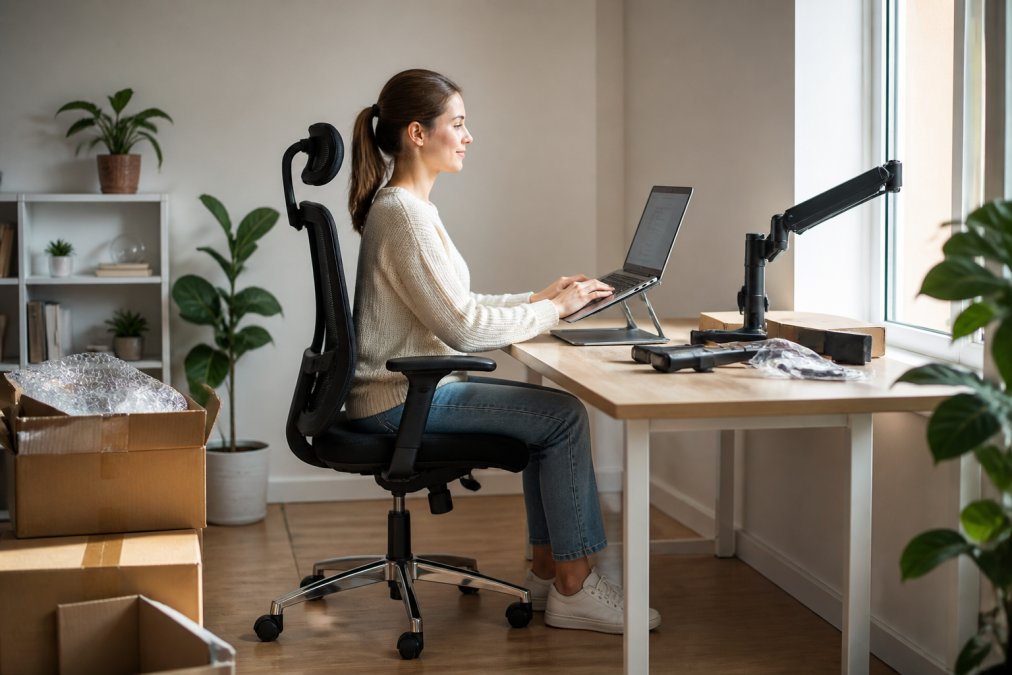
An ergonomic desk setup removes the daily strain that keeps re-creating the problem. You can stretch and exercise all you like, but if your screen sits too low, you are undoing the work every single day.
Monitor Height and Chair Position
The top of your screen should sit at roughly eye level, or just below. If you use a laptop without a stand, your head drops forward the moment you look at it. A laptop stand plus a separate keyboard fixes this in one move.
Your chair needs to support your lower back so you are not slumping to find comfort. Feet should rest flat on the floor, or on a footrest if your chair is too high. Elbows should sit at roughly 90 degrees when your hands are on the keyboard.
Distance matters as well. Sit about an arm's length from the screen. Too close and you crane your neck; too far and you lean in.
NeckRelief Pro™ Restore Your Neck After →
Everyday Lifestyle Changes That Help Reverse a Neck Hump
Lifestyle changes matter because a neck hump is rarely caused by one thing. It builds from the sum of how you sit, sleep, carry bags, and move through the day.
Carrying a heavy bag on one shoulder tilts the whole spine and loads one side of the neck. Switch to a rucksack with two straps, or alternate shoulders if you must use a single strap.
Strength work helps more than most people expect. Rows, face pulls, and band pull-aparts strengthen the upper back muscles that hold your shoulders back. Two short sessions a week is enough to make a difference over a few months.
Weight management plays a role too. Extra body weight increases the load the neck and upper back carry, and the fat pad at the base of the neck is part of the same picture. This is not about blame; it is simply one more factor you can influence.
Finally, check your pillows. A pillow that is too thick pushes the head forward all night. A rolled towel under the neck can support the natural curve without forcing the head up.
Tools and Products That Support Your Neck at Home
Supportive tools help you hold the gains you make from stretching and habit changes. They are not a substitute for the daily work, but they make it easier to stay consistent.
At Inspree, we curate products for exactly this kind of everyday problem. The NeckRelief Pro™ cervical massage pillow (£39.99) is designed to ease the tension that builds up after long screen sessions, and it fits neatly into a ten-minute evening wind-down. For the upper back rounding that usually comes with a neck hump, the SpineFlow™ back support (£34.99) targets the discomfort that comes from sitting for hours. If you prefer a recovery-focused approach, the LumoPress™ cupping set (£22.99) is a gentle option for releasing tight muscles at home.
A few low-cost additions are worth considering alongside these:
- A laptop stand to bring your screen to eye level
- A separate keyboard and mouse for comfortable typing
- A firm, supportive pillow that keeps your neck neutral overnight
- A resistance band for daily upper-back strengthening
None of these fix a neck hump on their own. Used alongside the stretches and habits above, they make the whole routine easier to keep up.
When to See a GP About Your Neck Hump
See a GP if your neck hump appeared quickly, is painful, or comes with numbness, tingling, or weakness in your arms or hands. Those symptoms can point to nerve involvement or another underlying cause that needs proper assessment.
A neck hump that has built slowly over years from posture is usually safe to work on at home. A hump that has appeared over weeks, or one accompanied by unexplained weight loss or night pain, needs medical review rather than exercise.
If you have osteoporosis or a history of spinal fracture, speak to your GP before starting any new stretching or strengthening routine.
Frequently Asked Questions
Can a neck hump be reversed naturally?
In many cases, yes, particularly when the hump is caused by posture rather than structural changes. A combination of posture correction stretches, daily movement breaks, and an ergonomic desk setup can reduce the appearance of a neck hump over time. If the hump is linked to bone changes or another medical condition, natural methods may help manage symptoms but won't reverse the underlying cause. A GP can assess which category you fall into.
How long does it take to fix a neck hump with exercise?
Most people notice gradual improvement in how their neck and upper back feel within four to six weeks of consistent daily stretching and posture work. Visible changes to the shape of the upper back typically take longer, often three to six months. Consistency matters more than intensity. Short daily sessions of posture correction stretches beat occasional long workouts. If you see no change after several months of steady effort, speak to a GP.
What causes a neck hump to develop?
The most common cause is prolonged forward head posture from looking down at phones, laptops, and tablets. Over time, the muscles at the front of the neck tighten while those at the back weaken, and the upper back rounds forward. Age-related bone changes and conditions such as osteoporosis can also contribute. Understanding which factor applies to you helps you choose the right approach, whether that's how to improve forward head posture through daily habits or seeking medical advice.
When should I see a GP about a neck hump?
Book an appointment if you have persistent pain, numbness or tingling in your arms or hands, or if the hump appeared suddenly. Also see a GP if you have a history of osteoporosis, have taken steroids long-term, or if the hump is getting worse despite consistent posture work. These signs may point to an underlying condition that needs proper assessment rather than self-treatment alone.